By Mohammed Bello Doka
Tinubu planned and plotted, Fadahunsi threatened, Davido sang and, at the end of the day, Adeleke danced.
Welcome to this week’s edition of Sarcastic Sunday with Mohammed Bello Doka, where we study Nigeria’s political gymnastics sarcastically because doing otherwise will choke us to death.
Osun has just finished one of the most entertaining political dramas of the year.
The APC arrived with a calvary of governors, senators, ministers, national party leaders, a 276-member campaign council and enough political machinery to make one wonder whether Osun was holding a governorship election or hosting a meeting of the Federal Republic.
And what a meeting it was.
The APC did not come to Osun to exchange pleasantries. It assembled a 276-member National Campaign Council chaired by Imo Governor Hope Uzodimma – the same governor accused of siphoning over N800 billion from the APC Governors Forum coffers, with Yobe Governor Mai Mala Buni, Senate President Godswill Akpabio and Speaker Tajudeen Abbas; the duo at the center of N110 billion illegal appropriation to the National Assembly as co-chairmen.
Governors, National Assembly leaders, ministers, federal and state lawmakers and other major stakeholders were included, alongside committees for mobilisation, finance, logistics, security, election management and a retinue of data boys.
Thousands of security personnel were also deployed for the election. Reports put the combined deployment by the police, NSCDC and EFCC at more than 25,000 personnel, while INEC prepared over 30,000 NYSC members as ad-hoc staff and an army of political thugs the press is not generous enough to give a figure.
In short, the APC brought the cavalry.
And then Adeleke won.
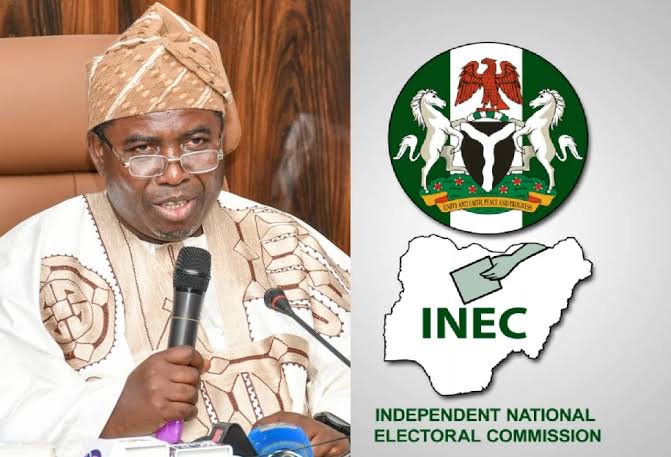
INEC declared Adeleke winner with 511,067 votes against APC candidate Bola Oyebamiji’s 444,815, a margin of 66,252 votes, with Adeleke taking 19 of Osun’s 30 local government areas.
So, congratulations to Osun.
And condolences to the calculators and of course the master ‘tragedist’. I mean strategist.
Before the election, some of the loudest APC voices had already conducted the funeral of Adeleke’s political career. According to their predictions, the dancing governor was finished. Some figures circulating online made it seem that the only remaining ceremony was the handover. Many where determined to out dance and humiliate him afterwards.
Apparently, even Heaven could not save Adeleke, they boasted.
Heaven did not need to.
Osun voters did.
The real political diagnosis may therefore be simpler: APC supporters who spent the campaign confidently predicting Adeleke’s defeat may have been suffering from a particularly advanced case of Chronic Bwala Syndrome ( CBS) — the Nigerian political condition in which yesterday’s inconvenient facts are treated as though they never existed, provided today’s narrative requires something else.
And when the facts become too difficult to reconcile, Comprehension Deficiency Syndrome ( CDS) comes to the rescue.
You explain the result.
They explain the explanation.
You show them the votes.
They show you a conspiracy.
You remind them that Adeleke won.
They tell you that he probably won because Tinubu has already reached an agreement with him.
Ah, Nigeria.
Even defeat now requires a political interpretation.
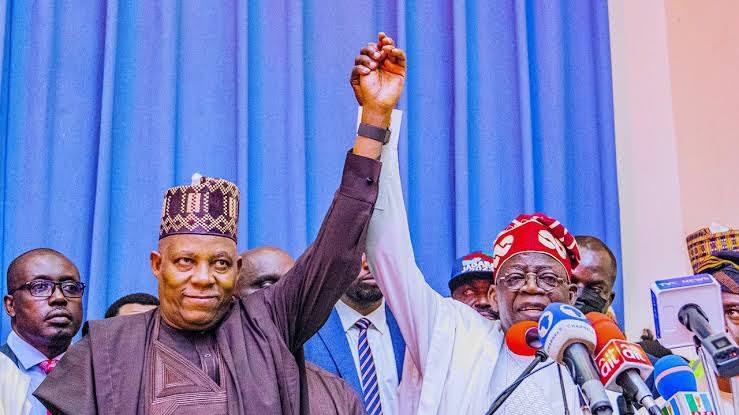
And that brings us to the latest song being released after the election: Tinubu has allegedly reached an agreement with Adeleke; Adeleke will return to the APC; and, naturally, he will support Tinubu in 2027.
Evidence?
Nothing substantial has been placed before the public to establish such an agreement.
Tinubu congratulating Adeleke after the election is hardly proof of a secret political merger. It is what presidents normally do after elections.
But in the wonderful school of Nigerian political mathematics, congratulations can become negotiation, negotiation becomes agreement and agreement becomes defection before the tea gets cold.
Perhaps tomorrow we will be told that the ballot papers themselves signed the agreement.
Then the tribal choir has joined the performance.
The new chorus is that Adeleke must not be seen fighting the “Yoruba project.”
This is fascinating.
When Adeleke was fighting for his political survival, it was an election.
After he wins, it suddenly becomes a Yoruba project.
If he criticises Tinubu, he is fighting the Yoruba project.
If he remains outside APC, he is fighting the Yoruba project.
If he refuses to support Tinubu in 2027, he is apparently fighting the Yoruba project.
But if he joins APC, perhaps he will suddenly become the wisest Yoruba politician alive.
That is not democracy.
That is political tribal arithmetic.
Adeleke was elected governor of Osun, not custodian of a tribal project.
Then there was the Fadahunsi controversy.
Senator Francis Fadahunsi became embroiled in a controversy: his infamous kill accord party members threat. The police invited him over the matter, while Fadahunsi disputed the interpretation of his comments. And the police bought it because apparently all is fair in politics.
But politics has a wicked sense of humour.
Sometimes you make one statement and your opponent campaigns with it for weeks.
Then came the “all is fair in politics” philosophy, an issue we had already examined before the election.
Osun has now supplied the answer.
If all is fair in politics, apparently voting against the political establishment is also fair.
The controversy over the freezing of Osun State Government accounts added another layer to the campaign. For Adeleke’s supporters, it fitted into the narrative of a Federal Government hostile to an opposition governor.
Whether one accepts that interpretation or not, political perception matters. But reality even matters the most.
And the APC has a national perception problem.
The cost-of-living crisis remains one of the biggest political liabilities facing the Tinubu administration. The IMF reported in June that poverty had reached 63 percent at the national poverty line, while food insecurity remained severe.
The government can point to reforms and improving macroeconomic indicators.
Fine.
But Nigerians do not eat macroeconomic indicators.
You cannot cook GDP.
You cannot fry foreign reserves.
You cannot tell a struggling family that food is expensive because the fundamentals are improving.
That disconnect matters at election time.
The APC candidate was not contesting against Adeleke alone. He was also carrying the baggage of the ruling party.
And then came Davido.
The joker.
Davido did not merely defend his uncle. He turned his enormous following on X into an offensive political weapon.
He attacked narratives.
He challenged claims.
He mobilised supporters.
He questioned INEC over delays in uploading results.
He even raised concerns during the election about alleged attempts to restrict his movement into Osun.
The allegations were his, not established findings, but politically the point was clear: Davido was not sitting on the bench.
He was playing.
And for once, the people accustomed to attacking Adeleke online were often forced to defend themselves.
Davido ran the streets. Controlled the narrative and for a while he owned the media space.
The opposition ran the ballot.
And somewhere in the middle of all the shouting, Adeleke was winning.
Then came the dancing.
The APC spent considerable energy portraying Adeleke’s dancing as evidence of unseriousness.
Adeleke did not stop.
They mocked him.
He danced.
They predicted his defeat.
He danced.
They said he was not serious enough.
He danced.
Then INEC declared him winner.
He danced again.
Maybe the problem was never the dancing.
Maybe the problem was that his opponents were dancing around the real issues. Perhaps dancing wrongly.
Adeleke did not win because he danced. He won because the dancing was attached to a broader political strategy: incumbency, visibility, projects commissioned before the election, a media operation that understood the battlefield, a debate performance that exceeded expectations and a campaign that successfully turned several attacks into political ammunition.
And then there were the voters.
That is the part nobody can spin away.
The APC brought governors.
It brought senators.
It brought ministers.
It brought national party leaders.
It brought a massive campaign council.
Security agencies deployed thousands of personnel.
The political establishment descended on Osun with the confidence of a party that expected to demonstrate its strength.
And Osun voters demonstrated theirs.
That is why Osun should worry the APC beyond Osun.
The result is not automatically a prophecy of 2027. But it is a warning.
If opposition parties can overcome their internal divisions, build credible grassroots structures, protect their votes and stop surrendering the media battlefield, Osun could become a mirror of a much bigger contest.
The APC cannot assume that federal power automatically translates into votes everywhere.
It cannot assume that governors, senators, ministers and party leaders can be transported into a state and converted into electoral victory.
And it cannot assume that social-media propaganda is a substitute for public confidence.
Because once the voter reaches the polling unit, the governor’s convoy disappears.
The minister disappears.
The senator disappears.
The data boy disappears.
There is only the voter and the ballot.
In Osun, the ballot spoke.
Adeleke won.
So let us finish this week’s gymnastics lesson properly.
Tinubu planned and plotted.
Fadahunsi threatened — or made remarks opponents interpreted as threatening, an interpretation he disputed.
The APC brought the governors, senators, ministers and political heavyweights.
Davido sang, attacked and mobilised.
The voters ignored the spreadsheets.
Resisted the temptation of rice and noodles.
Adeleke danced.
And he won.
Now the new song says he will return to APC and support Tinubu in 2027.
Maybe.
Maybe not.
But before anybody starts writing that script, they should remember one small detail.
Adeleke has just demonstrated that he can win an election while standing outside the APC, even after the political establishment descended on his state.
Perhaps the better question is not whether Adeleke will return to APC.
Perhaps the better question is why the APC, after all that machinery, still could not stop him.
Because Osun has delivered the punchline.
You can bring the machinery.
You can bring the money.
You can bring the governors.
You can bring the senators.
You can bring the ministers.
You can bring the narratives.
You can bring the charts.
But you cannot vote for the people.
The people have to do that themselves.
And in Osun, they did.
Tinubu planned.
Fadahunsi threatened.
Davido sang.
And at the end of the day, Adeleke danced. It remain to be seen in 2027 will Adeleke dance with Tinubu or with the people of Osun.
Mohammed Bello Doka can be reached via bellodoka82@gmail.com