Isaac Samuel
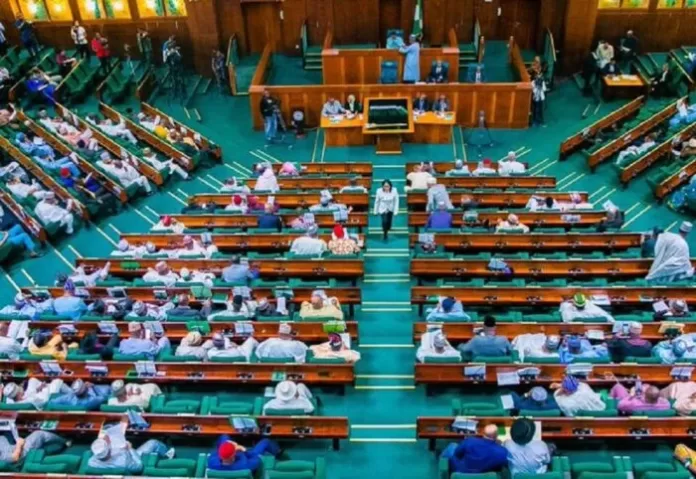
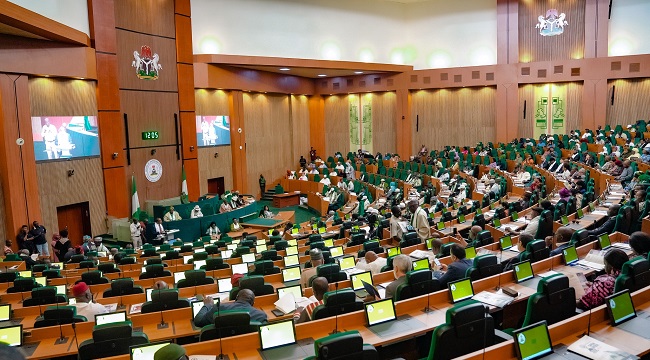
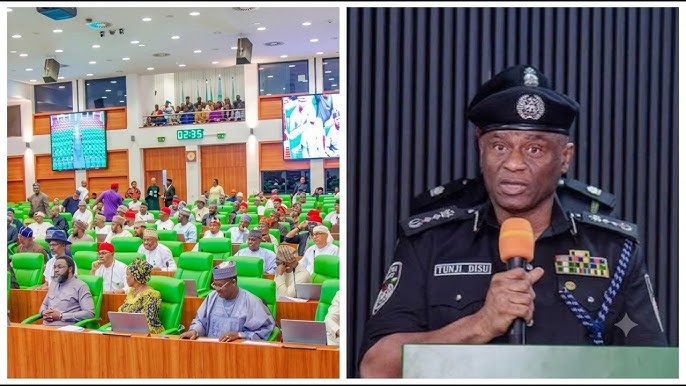
The Inspector-General of Police (IGP), Olatunji Disu on Wednesday explained why the Nigeria Police Force could not produce the self-acclaimed Director-General of the controversial Presidential Foreign Investment Promotion Council (PFIPC), Prince Adeyemi Adeniyi, before the House of Representatives Ad-hoc Committee investigating the council.
The police said Adeyemi, who is currently in its custody, remains under a valid court remand order, making it impossible for the Force to release him to appear before the lawmakers.
The IGP’s position was conveyed to the committee by Deputy Commissioner of Police (DCP) Olufemi Akinola, who represented the police chief at the hearing.
Akinola said the police could not personally honour the invitation because of an official engagement but reaffirmed the Force’s commitment to cooperating with the National Assembly.
Reading the IGP’s letter to the committee, Akinola said the police recognised the constitutional oversight powers of the National Assembly but could not produce the suspect because of the subsisting court order.
According to the letter, “the suspect remains in our custody under a subsisting court order. The Nigeria Police Force may not be able to produce the suspect before the committee in view of the subsisting court order.”
The police, however, urged the committee to obtain a production warrant from a court of competent jurisdiction to enable the Force produce Adeyemi without violating the court’s directive.
“The Nigeria Police Force acknowledges the constitutional oversight powers of the National Assembly and remains committed to cooperating with the committee in the discharge of its mandate.
“However, it will be appreciated if a production warrant is sought from the court of competent jurisdiction to enable the police comply,” the letter stated.
Responding, Chairman of the House Ad-hoc Committee, Rep. Yusuf Adamu Gagdi, clarified that the police had not refused to honour the committee’s invitation.
He said the Inspector-General merely informed lawmakers that Adeyemi could not be released because he was being held pursuant to a court order.
“The Inspector-General did not refuse to present him before this committee. He only cited the fact that the suspect is in custody by virtue of a subsisting court order. Until that order is vacated, the police cannot produce him before us,” Gagdi said.
He added that the committee would respect the principle of separation of powers and would not take any step capable of interfering with ongoing judicial proceedings.
Gagdi also noted that the committee was mindful of parallel investigations by the Economic and Financial Crimes Commission (EFCC), the Independent Corrupt Practices and Other Related Offences Commission (ICPC), the Department of State Services (DSS), the Nigeria Police Force and the Office of the National Security Adviser.
He said the committee would continue to engage the police and other agencies through written correspondence as it concludes its investigation.
The House panel is investigating the circumstances surrounding the inclusion of the PFIPC in the 2026 Appropriation Act despite repeated claims by several government agencies that the council has no legal backing or presidential approval.
Adeyemi, who allegedly presented himself as Director-General of the council, is one of the central figures in the probe.
The committee is expected to present its preliminary findings next week before submitting its final report to the House of Representatives for consideration.