By Yusuf Bangura
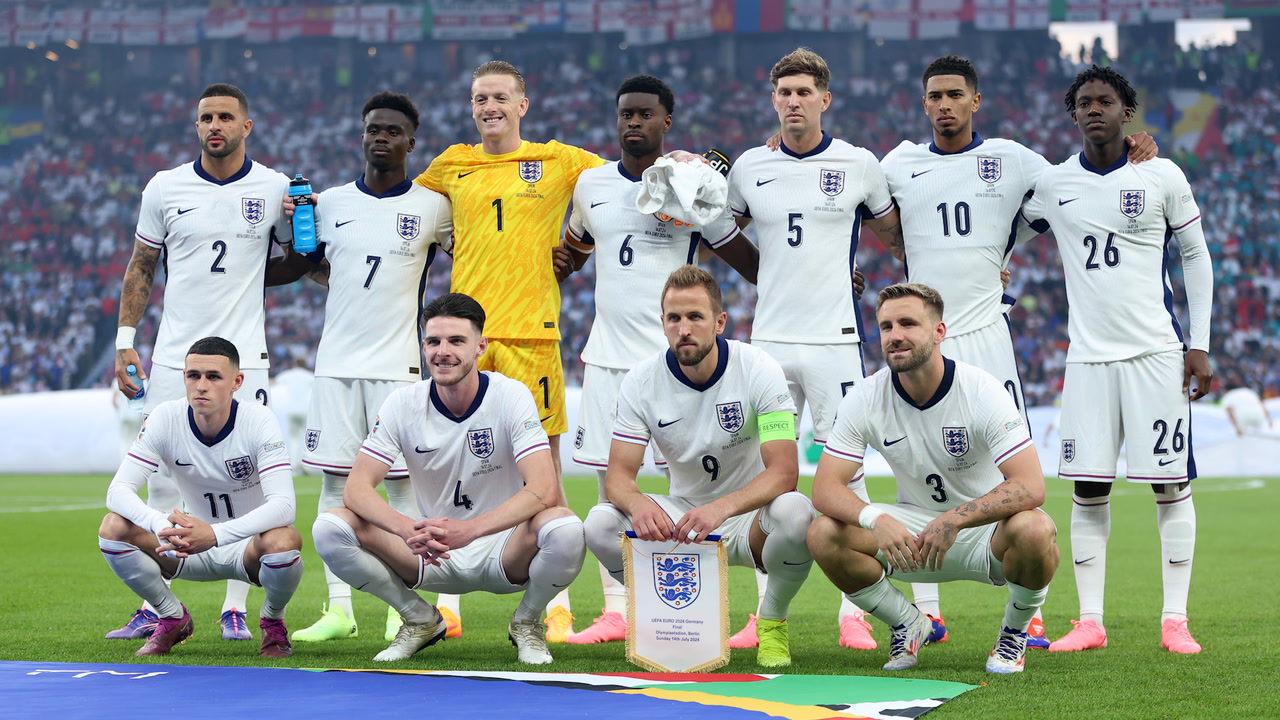
England, who boast about inventing football, have been knocked out of the World Cup by the defending champions, Argentina. They are one of only eight countries that claim World Cup pedigree, having won the tournament in 1966 on home soil.
But that was 60 long years ago. Since their captain, Bobby Moore, lifted the Jules Rimet trophy in 1966, England’s relationship with the tournament has been a narrative of high expectations—bordering on entitlement—dramatic heartbreaks, and tears.
There’s even a motivational song turned anthem that infects the English football space when the tournament kicks off: “It’s coming home, it’s coming home, it’s coming—football’s coming home.”
Fans never tire of hoping for success and singing this song—sometimes drunkenly—in stadiums, on the streets, in pubs, and on YouTube fan channels, even when the outcome is inevitably the same: utter defeat, whether in the quarterfinals or semifinals. This cycle of hope and grief repeats itself every four years.
And yet, despite having invented the game, England were latecomers to the World Cup, having started participating only in 1950. They did not feature in the 1930 founding tournament and boycotted those of 1934 and 1938, both of which they regarded as inferior to their own four-nation British International Championship of England, Scotland, Wales and Northern Ireland.
The Endless Wait
England are now the only former champions never to have returned to a World Cup final. They previously shared this embarrassing stat with Spain—the only other tournament-winning nation with a single star on their crest. But by beating France in the other semifinal, the Spaniards booked their ticket to Sunday’s showpiece, 16 years after their sole triumph. Left behind, the Three Lions have truly earned their reputation as the World Cup’s ultimate “nearly men’’ or “the forever bridesmaid”.
England’s World Cup record since 1966 has been a roller coaster, marked by three tournament absences (1974, 1978, and 1994), three semi-final runs (1990, 2018, and 2026), and numerous quarter-final exits (1970, 1986, 2002, 2006, and 2022). They were knocked out in the Second Group Stage in 1982, the Round of 16 in 1998 and 2010, and the Group Stage in 2014.
Nineteen coaches—including five interim managers—have been responsible for this highly fluctuating record. Following a series of failures by domestic coaches, the English Football Association took the bold decision to appoint Sweden’s Sven-Göran Eriksson in 2001. The move was designed to dismantle the traditional English style of long balls, hard tackles, and ‘kick-and-run,’ and rescue the team from lacklustre results. Since his historic appointment, about 43% of England’s permanent managers have been foreign.
England’s three semi-final heartbreaks came in 1990, 2018, and 2026. The beloved 1990 squad boasted standout players like Paul Gascoigne and Gary Lineker. They narrowly beat Cameroon, 3-2, in the quarter-finals with two Lineker penalties—including one in the 105th minute—to qualify for the semi-finals. I was shattered to watch Cameroon go out of that tournament when they had the match in the bag with only seven minutes of normal time remaining.
A tense 1-1 draw with West Germany in the semis went to a penalty shootout, which the Germans won, sparking a long-running national curse on penalties. England’s 2018 semi-final against Croatia didn’t go to penalties, but just like what happened last night at the Mercedes-Benz Stadium in Atlanta, England took an early lead, retreated into defensive football, and ultimately lost 2-1 in extra time—despite Harry Kane claiming the Golden Boot. England also bowed out of the 2022 Qatar World Cup with a 2-1 quarter-final defeat to France, after Kane squandered a late penalty that would have equalised.
The Painful Cost of the “Lead and Retreat” Syndrome
An England-Argentina World Cup match has always been full of high drama, sometimes bordering on war. It’s a historic rivalry that continues to captivate the football world—one deeply intertwined with nationalism and politics, stemming from the 1982 conflict over the Falkland Islands.
Across 15 official international matches, the head-to-head record is perfectly even: six wins and three draws each. However, three iconic World Cup encounters stand out, cementing this clash as one of the sport’s greatest fixtures.
The first was the tempestuous 1966 quarterfinal, in which Argentine captain Antonio Rattín angrily refused to leave the pitch after being sent off, claiming he did not understand the referee’s instructions (an incident that directly influenced FIFA’s introduction of red and yellow cards).
The second was the legendary 1986 spectacle, where Diego Maradona followed his controversial “Hand of God” goal by scoring the greatest individual goal in World Cup history—dribbling past five English players on a breathtaking 60-yard, 10-second dash from his own half. And the third was their Round of 16 clash at the 1998 World Cup in France, famously remembered for David Beckham’s red card.
The atmosphere last night in the stadium during the national anthems made it clear that this was more than just a football match. Heavily outnumbering the English, the Argentine fans signalled they were ready for “war” by unleashing a deafening chorus of jeers, whistles, and boos that almost entirely drowned out the English anthem “God Save the King.” The English supporters swiftly retaliated, whistling and booing when the Argentine anthem began. The pre-match ceremony dissolved into a battle of volume; as the Argentines sang even louder to compensate, the stadium’s public address system became virtually inaudible.
At that point, it felt as though we were about to witness the ugliest football match in history. Instead, the first half was tense and tightly contested, with neither side establishing an advantage. The Argentine players relied on a mix of subtle and blatant tactical fouls to disrupt England’s rhythm without drawing yellow cards—an art South American teams have famously mastered. But England refused to be intimidated, dishing out their own physical challenges to stifle Lionel Messi and his fellow forwards. By halftime, a gritty battle had produced 19 total fouls: 12 from Argentina and 7 from England.
England broke the stalemate ten minutes after halftime with a swift, brilliantly executed counter-attack. Kane picked up the ball in his own half and, showing immense vision, released midfielder Declan Rice. Rice drove forward before feeding Morgan Rogers on the right wing, who exploited the space against a retreating Argentine backline. Rogers then delivered a pinpoint low cross to Anthony Gordon, who slipped past a wrong-footed defender to tap it home.
I thought England would maintain their style of fast-paced, attacking play, especially since Argentina had not seriously threatened them up to that point. The Three Lions had shown they could go toe-to-toe with the world champions, and with a one-goal lead, they held all the momentum to go and score more.
Unfortunately, the old demons of protecting a lead rather than pushing for more intervened. For the final 35 minutes of normal time and five minutes of stoppage time, the England players retreated into their own half, gifting Argentina total freedom on the ball to control the midfield and pile relentless pressure on the penalty area.
To make matters worse, Thomas Tuchel actively invited the siege. He withdrew attacking threats like Anthony Gordon and midfielder Declan Rice to bring on defenders Ezri Konsa and Nico O’Reilly, while sacrificing the dynamic right-back Reece James for the towering defender Dan Burn.
Tuchel had tried this defensive approach against Mexico in the quarter-finals when England were one man down, successfully defending their lead to qualify for the semi-finals. But Argentina were not Mexico. Led by Messi, Argentina put up a spectacular display that matches any of the great matches I’ve watched in this tournament. They mounted raid after raid on the England goal area, opening up their defence and hitting the post twice. Amazingly, they had 88 per cent possession of the ball to England’s 12 per cent between the 55th minute when England scored and the end of the match. The game was virtually being played in the English penalty box.
Argentina devised an effective game plan. Possession-based teams like Spain would have tried to craft intricate, short passes in the English penalty box to disorganise the defence and deliver a killer blow or earn a penalty. Instead, Argentina responded to England’s low block by relying on the wings to destabilise the English defenders through aerial battles.
This tactic was surprising because Argentina have one of the shortest teams in the tournament. The average height of the English team was 183.38 cm, while that of Argentina was 179.42 cm. However, when a team has a player like Messi who can deliver pinpoint crosses from the wings, shorter but nimble players can hide on the “blind side” of tall defenders and outjump them.
Messi switched to the right and became a winger for long stretches of the match—a position he doesn’t often play in club and international football. His pinpoint crosses were like air raids. I couldn’t believe he could be so fast, agile, strong, and skilful at 39—consistently beating and outrunning the England left-back and full-backs and sending beautiful crosses to the goal mouth, which looked like cruise missiles, to land on the heads of Argentine forwards.
Messi provided an assist to Enzo Fernández, who equalised in the 85th minute. Spotting England’s defence backing off too far, he collected the ball on the right and played a sharp, simple pass to Fernández, who was left unmarked about 20 metres out. The second goal was magical. The Argentine midfielder Alexis Mac Allister released a powerful shot that rattled off the post.
While the English defenders stood static, watching the ball rebound, Messi pounced on it, ran down the wing past the defenders, and whipped a cross towards the back post. Lautaro Martínez (who came on as a substitute in the 81st minute) slipped between England’s defenders and delivered a close-range downward header to send the ball into the back of the net—and Argentina into the final. In the last five minutes of injury time, England resorted to their discredited traditional style of long balls, desperately trying to equalise, but the Argentines were too experienced and organised for that ancient and eratic style of football.
The tactic of “lead and retreat”, often associated with small teams with limited resources, has once again been found seriously wanting. When will England start playing like a football powerhouse, compete without fear against the giants of the game, and win?