By Yusuf Bangura
The world witnessed some astonishing, history-defining football last night between the mighty World Cup champions, Argentina, and the tiny African island nation of half a million people, Cabo Verde, ranked 67th by FIFA. For much of the second half and 30 minutes of extra time, the game was an incredible nail-biter. It had me on the edge of my seat, screaming occasionally as I watched in amazement a rookie tournament team go toe-to-toe with a team that has won the competition three times. It is, without any shadow of a doubt, the best match I’ve watched in the tournament so far.
No one, except perhaps Cabo Verdeans, gave Cabo Verde a chance. I wrote a short piece a few days before the match in which I predicted that Cabo Verde would take the game to penalties and win. This was after I had seen them hold two other world champions, Spain and Uruguay, to a draw in the group stage. A Nigerian friend and retired professor with whom I regularly discuss football told me that defending champions are “almost always difficult to beat” and that Cabo Verde had already made history, implyying that they should be satisfied with what they’d already achieved. I replied that Cabo Verde still had more history to make.
I imagined that they had demonstrated resilience against big teams and were difficult to beat. They could, therefore, repeat such stellar stubbornness against the world champions and defeat them on penalties. But this prediction was grounded more on hope than on reality. Argentina has the world’s greatest player, who, though approaching 40, still looks like he’s in his prime, scoring goals for fun. He’s scored 7 so far in this tournament and now holds the world record of 20 tournament goals overall.
A Titillating Match
The first half was played largely in Cabo Verde’s half as Argentina completely dominated the game, treating their opponents like schoolkids. I received a WhatsApp message from a friend in Abuja, who was also watching the match, complaining that it was unfair to pair Cabo Verde and Argentina.
This was after Lisandro Martínez delivered a brilliant, lofted pass over the Cabo Verdean defence, and Messi perfectly timed his run to stay onside, elegantly trapping the ball with a sublime first touch and effortlessly volleying home the first goal into the roof of the net.
At that moment, I really thought there was going to be a rout and that Cabo Verde were going to be taught a football lesson. I agreed with him that it was a mismatch. I even wanted the match to end at that point to save Cabo Verde the fate of Zaire (now DRC), who suffered a 9-0 disgrace at the hands of Yugoslavia in their debut 1974 tournament.
But the match dramatically changed in the second half. I don’t know the pep talk the Cabo Verdean players received from their coach at half-time, but they emerged from the tunnel with tactical discipline, physical intensity, and absolute fearlessness. In the 59th minute, they suddenly broke through Argentina’s lines when Ryan Mendes, the team’s captain and winger, delivered an incisive pass to midfielder Deroy Duarte, who received the ball in a difficult area. He moved incredibly well from an acute angle on the right side of the penalty box and unleashed a low, right-footed shot, which bypassed a sliding Argentine defender and squeezed between the legs of the goalkeeper, Emiliano Martínez, into the bottom-left corner of the net.
The equaliser set the stadium ablaze, turning what looked like a comfortable night for Argentina into a high-stakes nightmare. The Argentine supporters, who were numerically superior in their blue and white shirts, couldn’t believe what had hit them. I jumped from my sofa in uncontrollable excitement, starting to believe that history was about to be made and the gods were honouring my prediction.
Argentina responded with ferocious intensity, raiding the Cabo Verde penalty area relentlessly. But they couldn’t breach Cabo Verde’s defence, which held amazingly firm. The hero was their 40-year-old goalkeeper, Vozinha. Even though I was worried about his tendency to toy with the ball like an outfield player, which could have led to an error and a goal, he really put on a masterclass in shutting out the shots of Messi and his co-forwards. Vozinha finished the match with eight saves—including several stunning stops mid-way through the second half and a crucial fingertip save in the dying minutes of stoppage time to deny a late Argentine winner.
Tactically, Cabo Verde’s 4-1-4-1 defensive structure proved incredibly difficult to break down even when they pushed forward and tried to break the Argentine midfield and defence. Substituted players injected fresh energy into the midfield, limiting Argentina’s game to side passes without deep penetration. Cabo Verde even looked the fitter side as they took the game to Argentina rather than sitting back and absorbing pressure.
The game finished 1-1 after the normal 90 minutes. The 30 minutes of extra time were a breathtaking, rollercoaster experience that nearly produced the biggest upset in tournament history.
Argentina wasted absolutely no time regaining the advantage. Just two minutes into the restart, defender Lisandro Martínez latched onto an opportunity and whipped a brilliant shot directly into the top right corner of the net.
But Cabo Verde refused to roll over. Exploiting a laboured and confused Argentina backline, Lopes Cabral, who will no doubt be playing in a top club next season, got hold of the ball on the left edge of the penalty box. He cut inside and curled a sensational strike past the Argentine keeper to dramatically equalise, leaving the Argentine crowd completely speechless.
In a moment of pure magic and love Cabral rushed to the stands to look for his partner and embraced her as the stadium erupted around them.
But Cabo Verde’s valiant efforts were shattered with nine minutes of extra time remaining, which would have pushed the match to a penalty shootout if Argentina hadn’t scored. Argentina advanced from the midfield and won a corner. Lionel Messi lofted the ball into the box, and centre-back Cristian Romero rose highest to head it home, taking a cruel deflection off the Cape Verde defender Diney Borges for an own goal.
Cape Verde threw everything forward in a desperate bid to equalise a third time. The Argentine keeper was forced into making a vital save from another dangerous Cabral free-kick, and later had to bravely throw himself at the feet of the striker Gilson Benchimol in stoppage time to secure the gruelling 3–2 victory for Argentina. The Cabo Verde dream was over.
One for the History Books
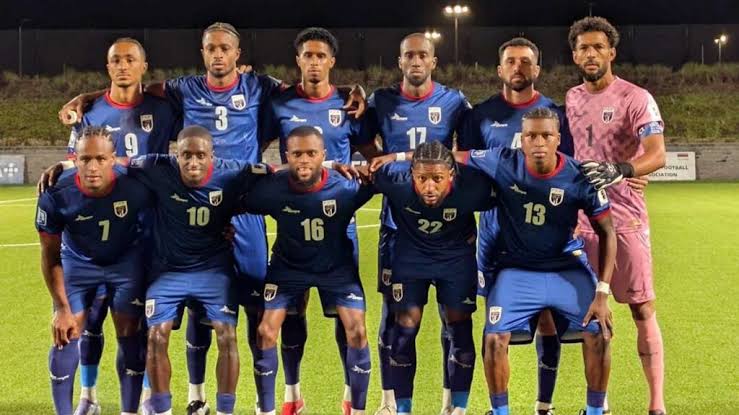
Cabo Verde’s sterling performance against the world champions and two other previous winners of the tournament will go down in the history books as the story of the 2026 World Cup. It demonstrates once again that the historical gap between Africa and the European and South American nations with a rich football heritage has considerably narrowed.
The bigger nations still have an edge because of experience, but this tournament has shown that their traditional dominance over Africa in World Cup matches is no longer guaranteed. European pundits and coaches, such as Gennaro Gattuso and Jose Mourinho, should bury their heads in shame for criticising FIFA for expanding the tournament from 32 to 48 teams. Gattuso even had the audacity to single out Africa as a region that didn’t deserve more slots, when his Italian team failed to qualify for three tournaments in a row—implying that one of Africa’s slots should have gone to Italy.
Pundits are now toasting Cape Verde as the team of the tournament. Shaka Hislop of ESPN, a YouTube football channel that I often watch, even believes no discussion of the World Cup in the future will ever be complete without reference to what Cabo Verde displayed in Miami in 2026. A good friend in the US WhatsApped me the following after the match: “One for the football history books.” It’s remarkable that Cabo Verde achieved this outstanding success without star players as almost all their players play in obscure European clubs. They didn’t also “park the bus,” as weak teams usually do when they face superior opponents. They pressed forward, exploited their opponents’ defensive weaknesses, and defended resolutely when it mattered.
Last night was really a crowning moment for African football, even though only two out of nine African teams made it to the Round of 16. It’s a masterclass on how lower-ranked nations can tactically frustrate, counter, and dismantle football giants in World Cup tournaments.