By John Dara
The Perilous Influx of Arms into Nigeria
A recent report released by the United Nations has revealed that various grades of ammunition originating from Libya have made their way into Nigeria and, by implication, into the hands of terrorists and bandits. The infiltration of extremist elements, including armed herders, Fulani militias, ISWAP, and ISIS affiliates, has been considerably facilitated by Nigeria’s own institutional vulnerabilities and, at times, complicity.
2.Algeria’s Uncompromising Stance Against Terrorism
Beyond the fact that Algeria shares a border stretching over 1,000 kilometres with Libya, its frontier is heavily militarised.Approximately 20,000 security personnel are deployed along its border corridors, and the nation maintains a zero-tolerance policy toward terrorism.
However, Algeria was not always this resolute. The country learned its lessons through a painful and costly chapter in its history.
3.The Black Decade: A Harrowing Lesson
Between 1992 and 2002, Algeria was consumed by a bloody conflict against insurgent jihadist fighters seeking to overthrow the government. While some historians describe the confrontation as a civil war, the period became infamously known as the “Black Decade.”
Initially, many citizens sympathised with these local terrorists, believing they were fighting to remove a corrupt government. That sentiment changed dramatically, however, when the insurgents began murdering civilians, journalists, and innocent people with reckless impunity.
As the violence escalated, these terrorist groups rapidly lost public sympathy. That shift in public perception altered the trajectory of the war and permanently transformed Algeria’s approach to terrorism.
4.Why Algeria Rejects Extremism Today
Today, many Algerians would rather endure a corrupt government than embrace the alternative of an Islamist insurgency and extremist rule. Their collective experience has instilled a deep societal rejection of terrorism and violent extremism.
5.The Nigerian Contradiction
Unfortunately, in parts of Nigeria, particularly within sections of the northern region, there appears to be a disturbing tolerance for terrorists, bandits, and jihadist elements. Some individuals seem more willing to accommodate extremism, religious fanaticism, and insurgent ideologies than to confront them decisively, even while criticising governmental corruption.
Across parts of West Africa, especially in Mali, Burkina Faso, and Niger, insecurity has become so severe that military takeovers have displaced civilian governments. These developments should serve as a grave warning to all who underestimate the dangers posed by terrorism and violent extremism.
5.Reckless Narratives and Their Consequences
The rhetoric of certain influential figures in northern Nigeria, remarks that appear to excuse, rationalise, or encourage extremist tendencies, is deeply unfortunate. Such narratives have contributed to the indiscriminate infiltration of foreign militias and the unlawful proliferation of arms within Nigeria.
Among the statements that have generated significant controversy are comments attributed to a former president Buhari and Current Governor Bala of Bauchi including claims that an attack on Boko Haram amounted to an attack on northern Nigeria, and assertions suggesting that Fulani herdsmen are global citizens who may reside anywhere and carry AK-47 rifles for self-defence. Whether intentional or not, such narratives have often been interpreted as providing moral cover for unlawful actors and have gravely complicated the fight against terrorism. Fulani man is not a global citizen and can’t leave anywhere. He can only live within his country and does not have the legal rights to invite others. A Christian or Muslim in Nigeria is not a citizen of Saudi Arabia or Vatican city by religious affiliation but by birth
5.Beyond Porous Borders
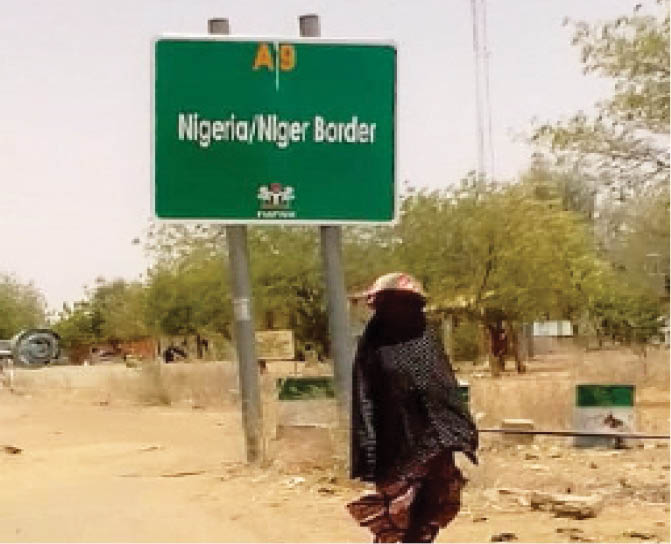
For years, many Nigerians have argued that our borders are porous and should be better secured, including through the construction of physical barriers and enhanced surveillance systems.
Yet the challenge extends beyond geography. The activities of certain corrupt officials within the police, customs, and other security agencies who allegedly facilitate the movement of terrorists and illegal arms in exchange for financial inducements, have further aggravated the insecurity crisis. No border fence can be effective if those entrusted with safeguarding it are willing to compromise national security for personal gain.
6.A Call for the Collective Rejection of Terrorism
I long for a Nigeria where terrorism is loathed with the same intensity that Algerians despise it. I long for a society in which terrorists, bandits, and extremists lose every ounce of public sympathy and social legitimacy.
The fight against terrorism cannot be won by military operations alone. It begins with a collective societal conviction that terrorism, regardless of its ethnic, religious, or political disguise, is wholly unacceptable. That conviction is where victory begins.