NEWS COMMENTARY
Akwa Ibom Exceptionalism: More Than a Slogan, A Living Reality
By Ubong Ekefre
…………………………………………………………..
Last night, during the 10th Anniversary Gala Night of a prominent radio station, Inspiration Fm, the Chief Press Secretary to Governor Umo Eno, Mr. Ekerete Udoh, delivered remarks that were as profound as they were thought-provoking.
Representing the Governor at the event, he spoke eloquently about what he described as “Akwa Ibom State Exceptionalism”, a concept that immediately resonated and lingered long after the applause had faded.
His assertion was simple yet powerful: Akwa Ibom is not just another state in the Nigerian federation. It is a state that has, through deliberate choices, visionary leadership, and a resilient people, carved out a unique identity and development trajectory worthy of reflection.
The more one considers the idea, the more compelling it becomes.
What exactly makes Akwa Ibom exceptional?
It is certainly not a claim of superiority over other states. Rather, it is an acknowledgment of a distinctive culture that has enabled the state to consistently rise above limitations, exceed expectations, and maintain a remarkable degree of social and political stability.
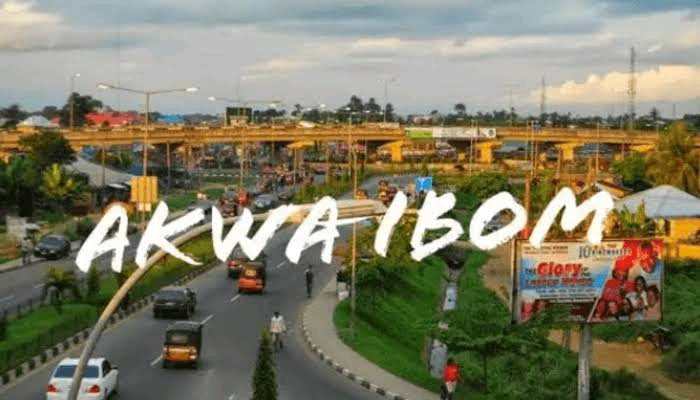
Akwa Ibom’s story is, in many respects, a story of possibility. Created in 1987 from the aspirations of a people seeking inclusion and self-determination, the state has transformed from a largely civil-service economy into one of Nigeria’s most significant development success stories. Across successive administrations, infrastructure has expanded, educational opportunities have grown, healthcare services have improved, and public institutions have strengthened.
Yet, the state’s exceptionalism extends beyond roads, bridges, airports, and public buildings.
Perhaps its greatest strength lies in its people. Across Nigeria and around the world, Akwa Ibom sons and daughters continue to distinguish themselves in academia, medicine, engineering, business, public service, and entrepreneurship. They carry with them values of diligence, excellence, hospitality, and community that have become hallmarks of the Akwa Ibom identity.

Political stability has also contributed significantly to this exceptionalism. In an era when political competition often breeds division, Akwa Ibom has demonstrated an uncommon ability to preserve continuity in governance while embracing democratic change. The prevailing atmosphere of unity and inclusiveness being championed under Governor Umo Eno’s administration further reinforces this tradition.
The ARISE Agenda itself reflects an evolving dimension of Akwa Ibom exceptionalism. It recognizes that development is most meaningful when it reaches ordinary citizens like farmers, traders, artisans, entrepreneurs, women, youth, and rural communities. It seeks not merely to build infrastructure but to improve lives.

This is why Mr. Udoh’s remarks deserve attention beyond the occasion that inspired them. They challenge us to think more deeply about who we are as a people and what we represent as a state. They remind us that exceptionalism is not a trophy to be displayed but a responsibility to be sustained.
The true measure of Akwa Ibom exceptionalism will not be found in government statistics alone. It will be found in our collective commitment to excellence, peace, unity, enterprise, and service. It will be measured by our ability to preserve what is working, improve what is not, and continually raise the standards by which we judge ourselves.
If Akwa Ibom is indeed exceptional, and there is growing evidence that it is, then the task before us is clear: to ensure that future generations inherit not merely the benefits of that exceptionalism, but the values and vision that made it possible.
For that reason, Mr. Ekerete Udoh’s observation was more than a ceremonial remark. It was an invitation to a conversation that Akwa Ibom people should continue to have about their past, their present, and the future they are determined to build.