By Yusuf Bangura
Jan 10, 2026
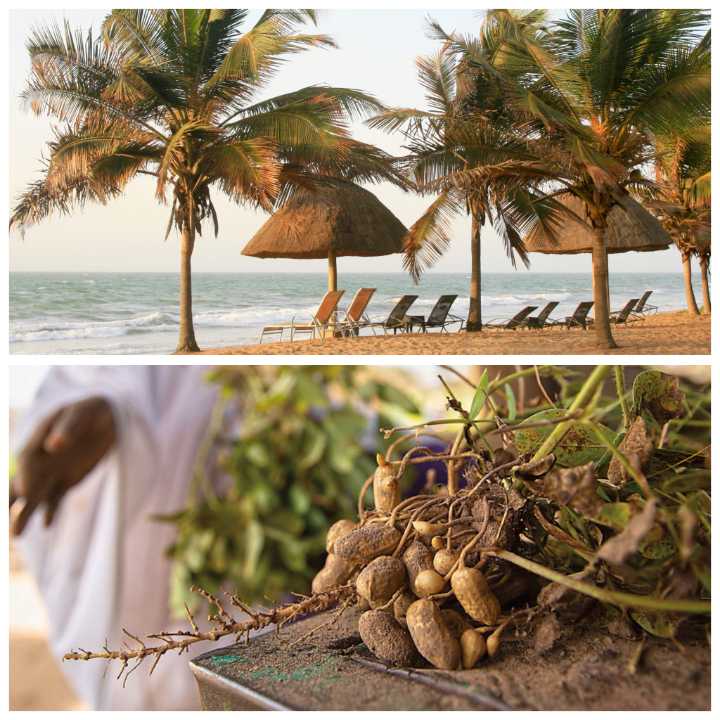
Despite its continued status as a low-income country, The Gambia is a rare example of a nation that has successfully pivoted away from a colonial-era mono-crop economy towards a more diversified economic structure. This is driven largely by its burgeoning tourism, re-exports and remittances. The transition from groundnuts to beaches has transformed the country into a fun-loving paradise, especially for tourists who seek to escape the European winter.
I attended both primary and secondary school with Gambian students in Freetown in the 1960s. In our geography class we always thought of Gambia as a groundnuts-only country. Indeed, we sometimes joked that every Gambian had a groundnut farm. The country wasn’t endowed with mineral resources like Sierra Leone and other West African countries. Critics doubted its viability because of its reliance on just one crop and its peculiar geography—coiled like a small intestine in the belly of Senegal.
Its radical shift from groundnuts to tourism, re-exports and remittances within a few decades of independence has been truly remarkable. Globally today, The Gambia is recognised for its coastal tourism—thanks to its golden beaches and sound infrastructure. Indeed, most people no longer travel to The Gambia for its groundnuts, but rather to enjoy its fabulous beach life.
*Transition to tourism*
It may be difficult to believe that The Gambia was an archetypal mono-crop economy in the 1960s and 1970s. During that period, the production and processing of groundnuts accounted for about one third of the country’s wealth or GDP. Mono-crop dependence was much higher in the export sector where groundnuts accounted for 90-95 percent of export earnings. About 45 percent of cultivated land was devoted to groundnuts; and 80 percent of rural Gambians made a living in the groundnut economy—as cultivators, handlers, and processors of the crop. Seasonal migrant workers, referred to as ‘’Strange Farmers’’ (or Navétanes) from Senegal, Mali, and Guinea were even recruited to meet high labour demand.
Today, even though about 70 percent of the rural labour force is still involved in the groundnut economy, and groundnuts account for 60-80 percent of rural farm incomes, the groundnut sector contributes only 5-7 percent of GDP, and 1-5 percent of export earnings. The new growth sectors are tourism, re-exports and remittances, which in total account for more than 70 percent of GDP or the nation’s wealth.
Tourism and remittances top the list with each contributing about thirty percent of national wealth (if we include the ripple or indirect effects of tourism), while re-exports now dominate foreign exchange earnings—accounting for about 90 percent of export value in 2024. More than one hundred thousand Gambians earn a living in the tourism sector. Studies suggest that the Sahelian drought of the 1970s, which affected export revenues, farm incomes, and food security was a significant driver in the decision to diversify the economy away from groundnuts.
Remarkably, tourism is believed to have started in 1965 with only 300 Swedish holidaymakers in search of sun, beaches and fun. Today, The Gambia receives more than 200,000 tourists every year. The founding president, Dauda Jawara, provided the catalyst, by stipulating that the 46-kilometre 800-metre wide coastal strip from Kololi to Kartung would be exclusively preserved for tourism development. Tourist numbers dropped sharply during the Covid years of 2020-23, but recovered robustly in 2024.
Beyond the sand and sea, Gambia’s beaches offer a flourishing ecosystem of hospitality. A network of resorts, restaurants, nightclubs and essential services like currency exchange and reliable taxis has developed along the coast, catering to diverse budget levels and tastes, and offering high-quality service. While it is difficult to estimate the exact number of hotels, some tourism promoters list more than 160 establishments and about 10 that are rated four and five-star.
Coco Ocean Resort, Kombo Beach Resort, Tui Blue Tamala, African Princess Beach Hotel, Kalimba Beach Resort, and Balafon Beach Resort stand out for elegance, ambience, and easy access to the beach. We were delighted to see Gambian entrepreneurs thriving at the high-end hotel and resort market.
For instance, under their Djeliba Leisure Group, Malleh Sallah and Omar Jawara own and operate Kalimba, Tamala, Kombo, and Balafon resorts. There have been complaints, however, about revenue leakage—70 percent of tourism income is estimated to be captured and taken out of the country by foreign businesses, with payments often made overseas before tourists arrive.
The high concentration of hotels along the coast makes it easy to hop from one establishment to another—in some cases without even leaving the beach. I love how local entrepreneurs have transformed the streets leading to the beaches and hotels into a lively corridor of stylish and welcoming bars, restaurants, and nightclubs. We didn’t see any makeshift structures (or what we call ‘pan bodi’ in Sierra Leone) even on the streets leading to the beaches. And motorbike taxis (okada) and tuk-tuks (keke or autorickshaws) are few and far between.
One may not even need to go to the beach to have a good time. With an impressive array of entertainment spots to choose from, there is never a dull moment for fun-lovers. However, there is need to develop the streetscape; paving the sidewalks would both beautify the streets and prevent sand erosion—a very serious problem in The Gambia.
*Exploring the Golden Quad: Kotu, Senegambia, Kololi, and Palma Rima beaches*
We spent much of our time at the Golden Quad, or the four beach cluster at Kotu, Senegambia, Kololi, and Palma Rima. These are the four most famous resort areas in The Gambia. Often referred to as ‘The Strip’, the Senegambia-Kololi area is the unrivaled epicentre of Gambian nightlife; Kotu adds bird watching and craft markets to its high quality hotels; and Palma Rima Hotel is believed to have one of the largest swimming pools in the country and considered ideal for watching the sunset over the vast ocean.
We stayed at the modestly priced but comfortable and well patronised Garden Beach Hotel at Kololi, a short walking distance from the beach. Most of the guests were Dutch. Vibrant restaurants serving Western and African cuisine lined the street leading to the beach. Just a few meters from the hotel, a Jamaican restaurant pulsing with rich reggae melodies quickly became one of our favourite spots. We were blown away by the curried goat, chicken, and oxtail stew—all served with classic Jamaican rice and peas.
We devoted New Year’s Day to exploring the entertainment spots on the Senegambia-Palma Rima beach area. We strolled from our hotel to the beach for lunch at Poco Loco, where we ate benachin (the Gambian name for Jollof rice) and fish stew, washed down with a refreshing glass of natural ginger juice—a fitting choice, because Gambians, like Sierra Leoneans, are great producers of the drink.
After the lunch, we took a leisurely, long walk to Palma Rima, passing a few tourists on horses. Women selling juice besieged us, inviting us to their kiosks to sample their drinks. Palma Rima was much cleaner and wider than Poco Loco beach. We ate brownies and ice cream as dessert at Solomon’s—a stylish restaurant owned by a Gambian. A large number of tourists, mostly Dutch, were having lunch, drinking, and enjoying themselves. We loved the ambience.
After the dessert, we decided to walk the full two and half-to-three kilometre beach strip from Solomon’s at Palma Rima to Senegambia Hotel. It was a hot afternoon, but the cool ocean breeze made the journey enjoyable. We passed through the Baobab restaurant—the only restaurant on the beach that was almost 100 percent patronised by Senegalese. Senegambia Hotel, which had mostly foreign tourists, was only a few metres away. The hotel is vast, boasting huge pools and elegant terraces where you can enjoy a meal or a drink while soaking up the sun to the gentle rhythm of the ocean waves. We rested for about half an hour at the seafront before walking back to our hotel.
*A chance encounter with a dear Nigerian family*
One of the surprises of our trip was our chance encounter with a dear Nigerian family—Jibrin Ibrahim, a former colleague in political science at the Ahmadu Bello University, his wife Charmaine, and their two adult children, Alhassan and Safya—who were also holidaying in The Gambia. Kadie and I attended Jibrin’s (Jibo) 70th birthday in Abuja in December 2023 and stayed at their house for a week. We were flying out the next morning, so we only had a few hours to spend together after finding each other.
We agreed on dinner at a Chinese restaurant at the vibrant Senegambia district—the real heartbeat of nightlife in The Gambia. We discussed Nigerian and world affairs over grilled fish, fried rice, spring rolls, chicken wings, squids, and other Asian food. I enjoyed the short stroll from the restaurant to the main road, where we boarded a taxi for our journey back to the hotel. The whole area was brightly lit, buzzing with tourists and locals enjoying the numerous bars, restaurants, and clubs lining the street. It was a fitting end to a fabulous six-day holiday.