…seek nationwide audit of firearms, special court for terrorism trial
Isaac Samuel
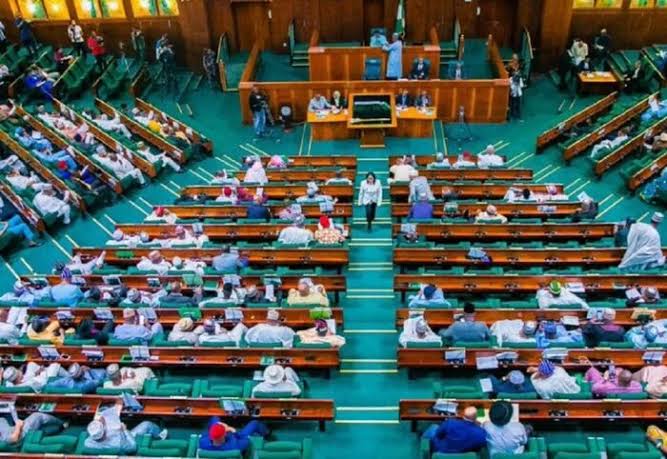
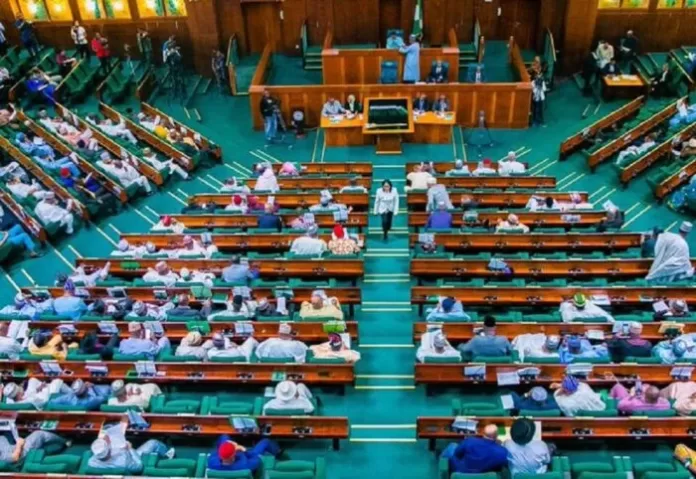
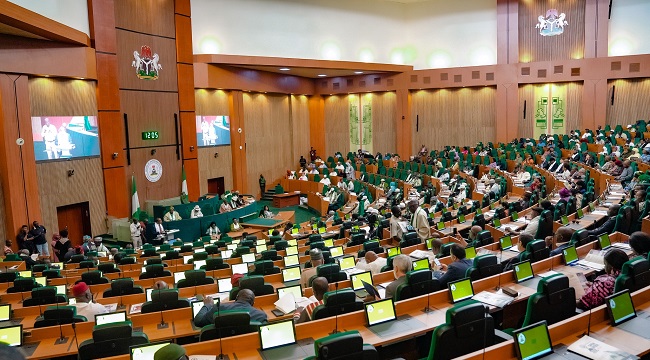
The House of Representatives on Wednesday adopted series of resolutions aimed at overhauling Nigeria’s national security architecture following weeks of increase attacks by terrorists groups.
The lawmakers proposed stricter legal action against terrorists, enhanced surveillance, and systemic accountability for arms and weapons handled by security agencies.
The resolutions adopted during the plenary session follows three days of exhaustive debates from November 25 to 27, which drew input from principal officers, committee chairmen, regional caucus leaders, security experts, and constituency-level testimonies.
Key among the resolutions is the prohibition of amnesty and ransom payments for terrorists, with the House mandating that all responses to criminal acts must follow lawful criminal justice procedures.
The lawmakers argued that informal negotiations or payments to insurgents only embolden criminal networks and compromise national security.
“That ransom payments and informal amnesty negotiations by government entities should be prohibited, and a clear legal framework should be enacted to outlaw such practices while regulating any authorised amnesty processes. Only lawful criminal-justice procedures shall prevail”, the lawmakers said.
Adopting over 40 recommendations at the committee of whole presided over by deputy speaker, Benjamin Kalu, the Green Chamber also called for a national audit of firearms and security equipment.
The House directed the government to establish a unified inventory system, complemented by digital tracking tools, periodic audits, and strict accountability measures.
This, it said is aimed to prevent diversion, loss, or misuse of weapons held by security agencies and private security outfits operating under regulated conditions.
The House said henceforth, security budgets would be treated as “First Line Charge” for timely disbursement.
The lawmakers while declaring border security as a national emergency, recommended the deployment of modern technologies including drones, biometric systems, satellite imagery, AI-enabled predictive analytics, and integrated early-warning systems.
The establishment of a National Border Guard Service was proposed to monitor unauthorized movement of persons and materials into the country.
Other resolutions adopted included the creation of a Special Court for terrorism, banditry, and kidnapping to ensure expeditious and transparent prosecution of offenders.
The lawmakers further proposed public naming, sanctioning, and prosecution of financiers of terrorism and banditry.
The Green Chamber recommended the modernisation of national security infrastructure, including reactivation and upgrade of CCTV systems and inter-agency intelligence coordination, adding that the regulation of private security outfits, with clear licensing, training, and oversight frameworks would complement national security operations.
One of the most contentious points of the debate centered on the resolution to reduce police and military personnel assigned for VIP protection.
The recommendation had read: “That deployment of police and military personnel for VIP protection should be significantly reduced, with a clear downscaling of security Details attached to political officeholders, in full compliance with the presidential directive. The released personnel should be reassigned to strengthen critical oppositions nationwide”.
Deputy Speaker Benjamin Kalu, however, cautioned that removing protection from public officials, particularly governors and federal justices, could undermine their focus and expose them to threats.
“If we give a governor immunity, it’s because we want to protect him, to focus on his work. Now, if you give him immunity and you take away his security, what is the essence of immunity?
“So the definition of VIP must be deliberately done so that public officers who are serving the nation, who are not very important persons because I don’t believe public servants are very important persons will be protected.
“They are just public servant for the period they are serving. When they finish serving, they will go. So I don’t think defining governors, justices of federal courts in the country, and leading state courts would have the VIP status. So there must be a deliberate definition of these status.”
But Chairman of the House Committee on Police Affairs, Makki Abubakar Yalleman, defended the presidential directive to withdraw police from VIP protection, noting that all 11,566 officers assigned nationwide had been reassigned to operational duties.
He stressed that civil defense and other trained personnel could provide alternative protection for VIPs, ensuring resources are concentrated where security threats are most pressing.
Kalu insisted that the Parliament’s recommendations were non-binding and aimed at balancing public officer protection with national security efficiency.
“We are not making law on the President’s directives. We are interpreting and recommending how these directives should be implemented to protect both officers and public safety,” he said.
The House commended President Bola Ahmed Tinubu for measures taken to bolster security, including the recruitment of 20,000 police personnel, expansion of forest guards under the Department of State Services, and postponement of his G20 summit participation to address domestic security challenges.
The resolutions, the House said, would be transmitted to the executive, all security agencies, and State Governments, and be sent to the Senate for concurrence.