Prof Lawrence ETIM
PREAMBLE
I promise you one thing – I will not use any mathematics or symbols in this explanation. You’ll find this interesting and enjoyable. Please, read on.
EXPLANATION
Space is commonly described using three directions (or dimensions):
(a) up and down,
(b) left to right, and
(c) front to back.
These three dimensions allow us to describe WHERE something is located. However, if you add time – which tells us WHEN something happens – you obtain a fourth dimension. Together, these four dimensions form what scientists call the space-time continuum (often simply referred to as space-time).
Now, we can say that space-time is a framework made up of three SPATIAL dimensions and one TEMPORAL dimension, within which every physical object and every event can be precisely located. In other words, nothing exists merely in space; everything exists in both space and time.
To make this clearer, consider the graph we learnt in secondary school. It has two axes:
(i) the vertical axis (up and down, or ordinate), and
(ii) the horizontal axis (left to right, or abscissa).
With just these two axes, you can locate a point on a flat surface. If you now imagine adding a third axis that runs from front to back, you create a three-dimensional system – much like the real world around us, where objects have length, width, and height.
But even this is not complete. Why? Because objects and events do not merely exist in SPACE – they also occur at specific moments in TIME. By incorporating time as a fourth dimension, scientists can fully describe WHERE and WHEN something exists or happens.
For example, saying “the book is on the table” is incomplete unless you also specify when it is there.
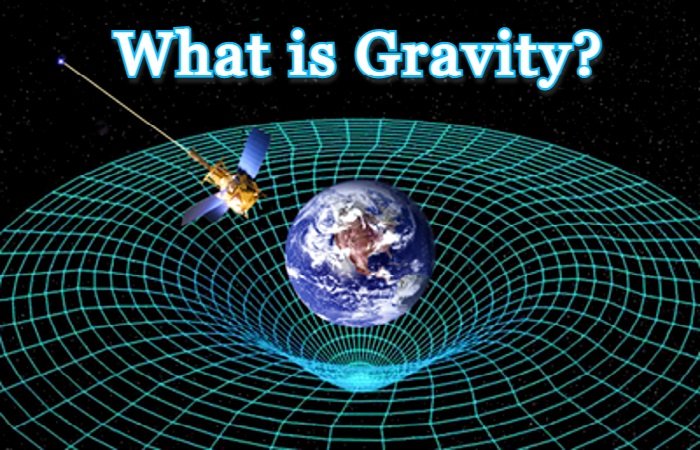
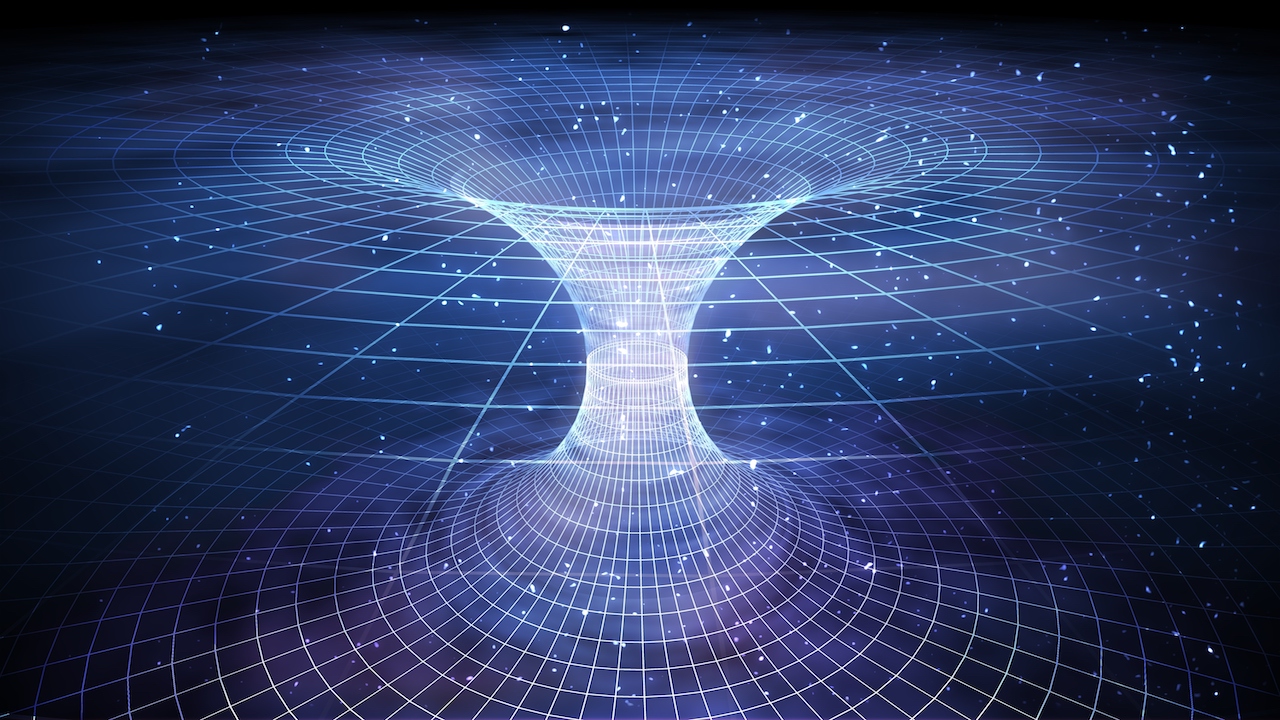
A further and deeper insight – introduced by Albert Einstein in his theory of relativity – is that space and time are not entirely separate entities. Instead, they are interconnected and form a single unified structure called space-time. Massive objects such as planets and stars can even “curve” (or bend) space-time, and this curvature is what we experience as gravity.
WHICH IS CORRECT❓
Is it space-time continuum or time-space continuum”?
In standard scientific usage, “space-time” is the accepted term. This is largely because we tend to think of spatial dimensions first and then incorporate time as an additional coordinate. While “time-space” is not technically wrong in a purely linguistic sense, it is not conventional and is rarely used in scientific discourse.
I know one dictionary with entry on Time-Sapce but non on Space-time. This means that the dictionary gave more weight to the conventional than scientific usage.
CONCLUSION
The space-time continuum is a four-dimensional framework that allows us to describe every event in the universe in terms of both its position in space and its moment in time. It is one of the most important concepts in modern physics and fundamentally shapes our understanding of reality.

Prof. Lawrence Etim is the Emeritus Professor of Fishery Biology and Former Dean, Postgraduates School, University of Uyo.