By Marcel Okeke
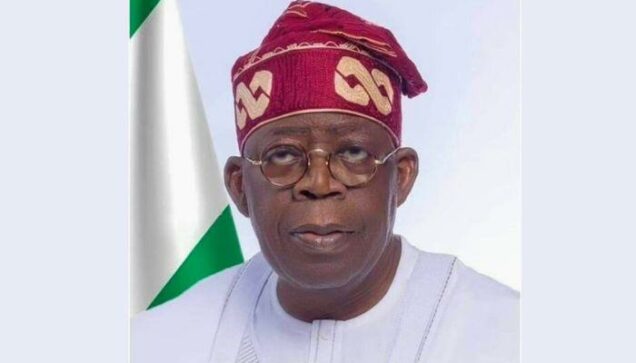
Without any technical jargons or the blame games currently ongoing in the Presidency and topmost echelon of the officialdom, the stark reality is that the President Bola Ahmed Tinubu administration has not been able to successfully implement any annual budget for upwards of three years. Neither the 2023, 2024 nor 2025 budget has so far been fully implemented. Till date, three annual budgets are yet running concurrently; an unprecedented and bizarre trend!
The Tinubu administration inherited the 2023 budget (from May 29, 2023), and ended up messing it up, after dragging parts of it into subsequent years. The budgets fully owned by the Administration (2024, 2025, and 2026) are all yet running; the 2026 Appropriation Act remains in the womb of Legislative processes, and could remain so endlessly. In the twilight of December 2025, Nigeria’s National Assembly approved a ‘revised’ N43.56 trillion 2024 Appropriation Act, and a ‘reworked’ 2025 budget of N48.31 trillion (extending the life of the budget). This, they did via the passage of the Appropriation (Repeal and Re-enactment) Bills—a strange legislative hatchet job to keep rolling over expired budgets. Purportedly, the capital components in both budgets are to be completed by end-March 2026.
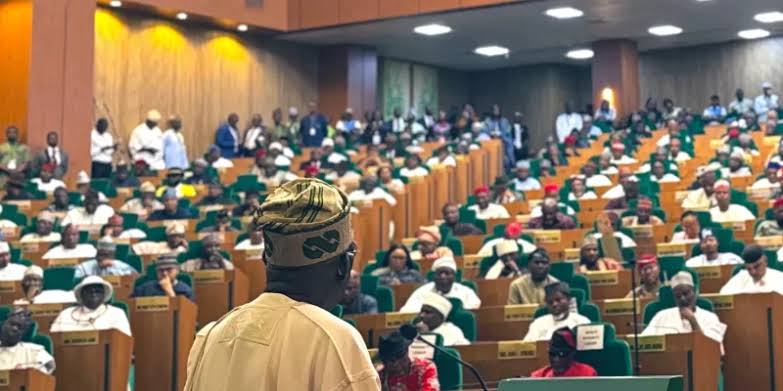
However, the depth and breadth of the scandal in poor budget execution of the Tinubu administration got exposed during the 2026 budget defense sessions at the National Assembly, involving the Ministries, Departments, and Agencies (MDAs). In fact, it came to light during the sessions that many MDAs recorded zero per cent capital fund release both in 2024 and 2025.
The defense sessions exposed the massive breakdown in the fiscal chain, where billions of naira were appropriated on paper in 2025, but the treasury released not a dime for most critical sectors.
In the Ministry of Transport, while N256.73 billion was allocated in the 2025 budget, only about N2.57 billion or roughly one per cent got released. The Minister, Saidu Ahmed Alkali said during his 2026 budget defense that his ministry recorded about 59 per cent overhead utilization in 2025, while capital releases stood at roughly one per cent, “and were largely not cash-backed.”
Similarly, the Ministry of Health and Social Welfare also received a negligible fraction of its approved capital allocation in 2025. The ministry received only N36 million of the appropriated N218 billion for capital projects, representing 0.0165 per cent! The Ministry of Interior, on its part, recorded zero capital budget releases for two consecutive years: 2024 and 2025. The Minister, Olubunmi Tunji-Ojo, said the zero allocation left the agencies under his ministry “struggling to upgrade facilities, modernize operations or expand infrastructure.”
The Ministry of Women Affairs and Social Development received only N394.8 million out of the N89.8 billion approved for the ministry’s capital expenditure in 2025. The Ministry of Housing also got zero funding for its capital projects in the 2025 budget, while the Ministry of Marine and Blue Economy received N202 million out of its N3.53 billion capital allocation for 2025, representing 1.7 per cent.
All these typify the shoddy budget implementation that has become the hallmark of the Tinubu administration that keeps mouthing the pursuit of the growth a trillion U.S. dollar economy by 2030. Before the Senate Committee on Appropriation the other day, Wale Eun, the minister for finance and coordinating minister of the economy, admitted that the 2024 and 2025 budgets were still running—that is, in the first quarter 2026!
Executive Chairman of the Nigeria Revenue Service (NRS), Zacch Adedeji, told the same committee that “unrealistic projections hinder effective budget implementation.” Adedeji said: “Budget funding must come from realistic projections. Efficiency is not about the size of the budget but about how much can actually be implemented.
“If you think you have ten units and spend accordingly, that is manageable. But if you assume you have one hundred and spend based on that assumption, you may run into serious problems if the funds do not materialize,” Adedeji told the legislators.
In the face of these blame games and ‘detonation’ of cans of worms before the Senate Committee, the Federal Government was still proposing implementing only 30 per cent of the 2025 capital budget before the end of November 2026. The remaining 70 per cent, according to the proposal which (reportedly) emanated from the Minister of State for Finance, Dr. Doris Uzoka-Anite, would be “rolled over to the 2026 capital budget to ensure seamless implementation.” This is already 2026: no approved budget yet!
At the root of all these conflicting and confusing prevarications is the view canvassed by the tax tsar, Zacch Adedeji, who pointed out that the budgets in the past couple of years had literally amounted to building castle in the air. In other words, the Federal annual budgets have been like fantasies that lack a solid foundation. Latching onto the “Renewed Hope Agenda” mantra, the Government kept rolling out budgets grounded on bogus assumptions.Specifically, the 2025 budget was built on the assumption of crude oil price of US$75 per barrel, oil production level of 2.06 million barrels per day, and exchange rate of N1,500/US$. The 2026 budget is pegged on the assumptions of crude oil price benchmark of US$64.85 per barrel, daily oil production of 1.84 million barrels, and exchange rate of N1,400 to the US dollar.
Most of these assumptions have never been met: oil production, for instance, has been largely below target all these years. For a long while, not only has Nigerian been unable to hit the budget assumptions, it has also not been able to meet its OPEC quota. In 2024, while the budget was pegged at about two million barrels per day of oil production, at no time was that volume met; rather, production level only hovered around 1.4 million barrels per day.
The huge gap between the budget assumption and the actual production level translates to substantial shortfall in revenue—leading to inability of the Government to have the (financial) resources to effectively implement the budgets. For the better part of 2025, and January 2026, Nigeria was unable to reach its OPEC oil production quota; and produced far below its budget targets.
The revenue gap engendered by this alone keeps the Government dealing with huge deficit financing challenges, year-in-year out. In desperation, the Government opts to remain a dominant borrower in all arms of the local financial markets. For same reason, it keeps scouting for, and securing bilateral, multilateral, and institutional credit from around the globe. These have led to the piling up of humongous local and foreign debts.
Even as the quantum of annual budgets have kept rising, Government has continued showing low revenue pressure in practically all critical areas of its mandate. While the total budget was N34.49 trillion in 2024, it jumped to N47.90 trillion in 2025; and further rose to N58.18 trillion in 2026. The capital components of these budgets also increased in the same pattern and pace.
However, it has become a notorious fact that the Federal Government has been owing almost all its contractors across sectors. The situation has assumed a crisis dimension in which these contractors had to picket a number of MDAs severally in recent times. Workers in the Federal public service have similarly been ‘up in arms’ threatening demonstrations and strike actions over their “three months’ outstanding wage awards and other pending allowances.” The implications of all these, especially the non-funding of the capital budgets, would include growing infrastructure deficit, poor service delivery, increased public debt burden, corruption and mismanagement, economic stagnation, etc. No wonder the state of Nigeria’s infrastructure has remained a major factor in rendering the business environment uncompetitive.
It also goes without saying that the consistently unfunded (capital) budgets creates so much room for corruption and mismanagement of funds. This has been at the root of the massive embezzlement, misappropriation, and outright stealing that have assumed dizzying proportions in all arms and MDAs of the government. Part of the upshot of all these is the number of “abandoned projects” that keeps mushrooming across the country. In place of these projects, the Government goes ahead dispensing patronage—in form of palliative packages—to selected sub-nationals. Perhaps, the budget failures that have hallmarked the Bola Ahmed Tinubu administration so far is a way of keeping the system ‘loose’ for ‘the boys.’ That could be why, for three consecutive years, the Government has remained unable to effectively fund the capital components of the annual budgets. Still, all conjectures point to the fact that the pattern is not about to change. Not when another general election is by the corner!
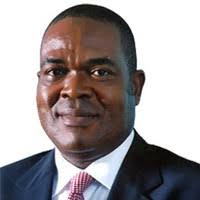
The author, Okeke, a practicing Economist, Business Strategist, Sustainability expert and ex-Chief Economist of Zenith Bank Plc, lives in Lekki, Lagos. He can be reached via: obioraokeke2000@yahoo.com (08033075697) SMS only