Isaac Samuel
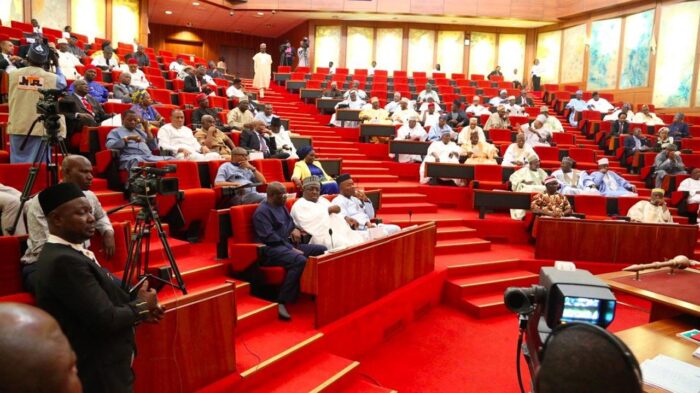
The House of Representatives on Tuesday descended into a rowdy session after it moved to rescind its earlier decision on the Electoral Act (Amendment) Bill, 2025, following a controversial voice vote presided over by Speaker Abbas Tajudeen.
The resolution followed a motion moved by Hon. Francis E. Waive pursuant to Order Nine, Rule 1 (6) of the Standing Orders of the House during an emergency plenary.
Leading the debate, Waive recalled that the Electoral Act (Amendment) Bill, 2025, was passed on Tuesday, December 23, 2025.
He, however, explained that a Technical Committee comprising the leadership of both chambers of the National Assembly, members of the Conference Committee, the Clerks of the Senate and the House of Representatives, as well as legal drafting experts from the Directorate of Legal Services of the National Assembly, later met to harmonise the bill and address identified anomalies.
According to him, the committee discovered inconsistencies and unintended consequences in some of the provisions of the legislation.
He stressed the need to ensure that electoral timelines and statutory provisions promote maximum participation, fairness, inclusivity, administrative efficiency and public confidence in the electoral system.
“It has become imperative to correct the identified inconsistencies and unintended consequences through appropriate legislative action in order to safeguard the integrity of the electoral framework,” Waive argued.
He, therefore, urged the House to rescind its decision on the bill and recommit it to the Committee of the Whole for fresh consideration.
When Speaker Tajudeen put the motion to a voice vote, the “nays” appeared to be louder than the “ayes” on the floor.
However, the Speaker ruled in favour of the “ayes,” declaring the motion carried.
The ruling sparked immediate protests from several lawmakers, who shouted in objection, accusing the presiding officer of ignoring the apparent majority voice.
The chamber quickly degenerated into a chaotic and tense atmosphere, with members raising their voices and engaging in heated exchanges across the aisles.
Despite the uproar, the Speaker stood by his ruling.
In a bid to restore order and further deliberate on the matter, the House subsequently moved into a closed-door session.