Isaac Samuel
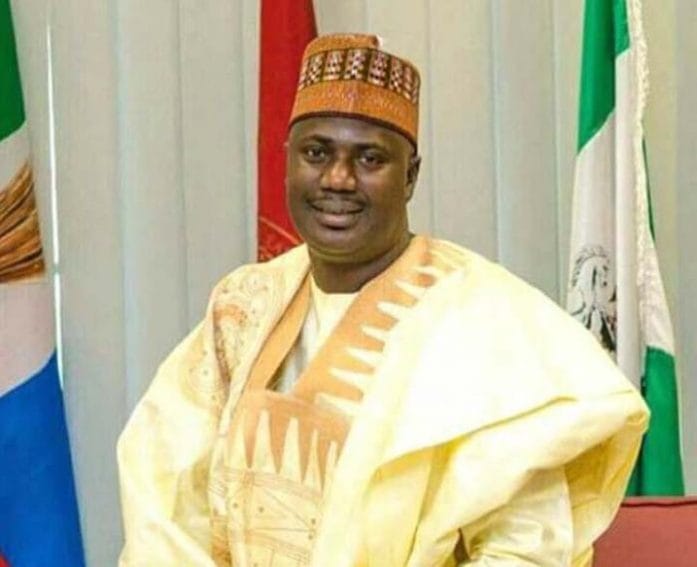
The National Assembly on Tuesday questioned the Minister of State for Agriculture and Food Security, Senator Aliyu Sabi Abdullahi, over the whereabouts of 2,000 tractors launched by the Federal Government under the Renewed Hope Agricultural Mechanisation Programme.
This was when the minister appeared before the Members of the joint Senate and House of Representatives Committees on Agricultural Production to defend the ministry’s 2026 budget.
President Bola Ahmed Tinubu had commissioned the tractors on June 23, 2025, along with other implements, at the National Agricultural Seeds Council, Sheda, marking the programme’s formal launch.
The initiative was aimed at modernising farming practices and boosting national food security.
But almost eight months later, the tractors had not yet been deployed.
Awaji Inombek, a House member from Rivers State, raised concerns over the delay, asking the minister to clarify why farmers had not received the machines.
Minister Abdullahi explained that the delay was intentional to avoid failures that plagued previous tractor distribution programmes.
According to him, the tractors were procured under the Renewed Hope Agricultural Mechanisation Programme, which has three components, one of which is already being implemented through the Belarus Mechanisation Programme.
He disclosed that under the arrangement, the Federal Government procured 2,000 tractors of different capacities, including 85-horsepower and 75-horsepower tractors, combined harvesters, over 9,000 agricultural implements, and 12 mobile workshops.
“The question of what is happening to the tractors is a very pertinent one,” the minister said. “We are working very hard to put measures in place that will prevent a repeat of what happened in the past.”
Abdullahi recalled that in previous interventions, tractors were often allocated to non-farmers, forcing genuine farmers to pay exorbitant fees to access them, while many of the machines eventually became abandoned or dysfunctional.
He said President Tinubu had directed that the current programme must ensure tractor services are brought as close to Nigerian farmers as possible at minimal cost.
To achieve this, he explained that the Bank of Agriculture has been mandated to manage the process and has already advertised the programme, targeting three categories of beneficiaries: young Nigerians, women in agriculture, and general agricultural practitioners.
“Thousands of people have applied, and they are currently undergoing due process for selection,” Abdullahi said.
He noted that the plan is to establish Agricultural Mechanisation Service Centres across the six geopolitical zones. Successful bidders will be linked to financing and will operate the centres, making tractor services available to farmers on a pay-per-use basis.
“With this model, a farmer with one hectare, half a hectare or two hectares can access tractor services, pay for the service and continue with farming activities, while the operator is responsible for maintenance,” he explained.
Abdullahi assured lawmakers that the rollout would begin gradually with the rainy season and is aligned with the food security emergency declared by President Tinubu.
He also highlighted that despite financial constraints, Nigerian farmers had recorded marginal increases in output.
House Committee Chairman Bello A. Ka’oje warned that reduced funding could undermine food security and economic recovery, stressing the need for transparency and prudent use of public resources.
Senate Committee Chairman Saliu Mustapha urged the government to prioritise timely funding, noting that allocation to agriculture dropped from N2.22 trillion in 2025 to N1.45 trillion in 2026, which could negatively impact productivity and food security.