Isaac Samuel
Opposition parties and civil society organisations have criticised the Senate for rejecting a proposal that sought to make real-time electronic transmission of election results mandatory in the ongoing amendment of the Electoral Act.
They described the decision as a setback to electoral transparency ahead of the 2027 general elections.
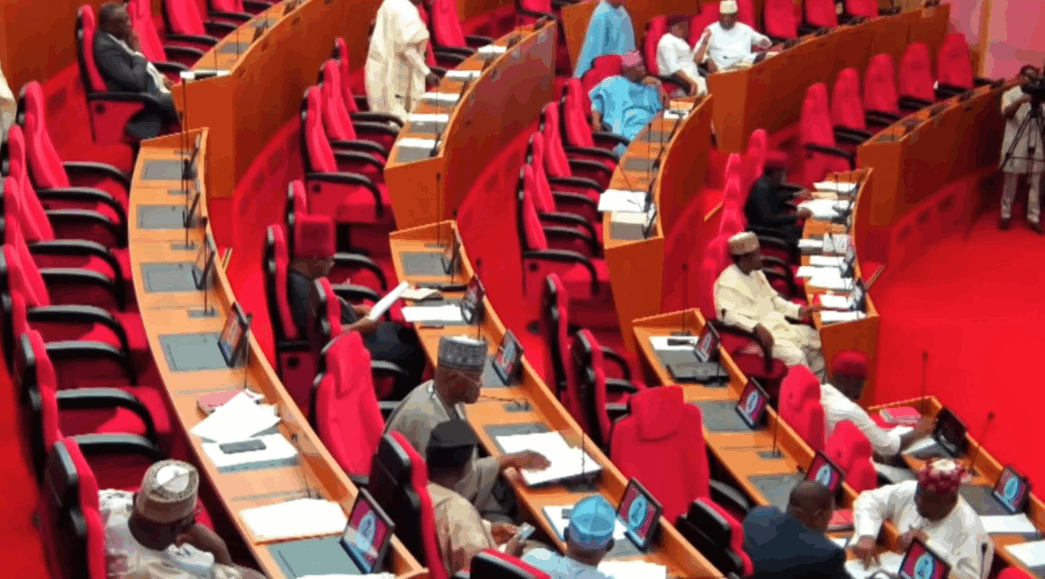
The Senate passed the Electoral Act 2022 (Repeal and Re-enactment) Amendment Bill 2026 after third reading but rejected a proposed amendment to Clause 60(3), which sought to compel presiding officers to electronically transmit results from polling units to the INEC Result Viewing (IReV) portal in real time after signing Form EC8A.
Instead, the Senate retained the existing provision in the 2022 Act, which states that the presiding officer shall transfer results “in a manner as prescribed by the Commission.”
Senate President Godswill Akpabio clarified that the Upper Chamber did not reject electronic transmission outright but retained the 2022 provision.
“The social media is awash with reports that the Senate rejected electronic transmission of results. That is not true. What we did was to retain what is already in the law and was used in 2022,” Akpabio said.
The Senate also rejected a proposed 10-year jail term for trading in Permanent Voter Cards, opting instead to retain a two-year term while increasing the fine from N2 million to N5 million.
Lawmakers reduced the notice of election from 360 days to 180 days and shortened the deadline for submission of candidates’ lists by political parties from 180 days to 90 days.
The chamber retained the use of the Bimodal Voter Accreditation System (BVAS) for accreditation but rejected electronically generated voter identification, maintaining the Permanent Voter Card as the mode of identification at polling units.
It also struck out a clause on the effect of non-compliance in election petitions.
Executive Director of YIAGA Africa, Samson Itodo, said the Senate’s decision went beyond e-transmission, noting that lawmakers also blocked the download of electronic voter cards from the INEC website, reduced the notice of election from 360 days to 180 days, and shortened the timeline for publishing the list of candidates from 150 days to 60 days.
According to him, the compressed timelines could heighten the risk of logistical challenges during elections.
“What the Senate passed today is not reform. It is a betrayal of public trust and a deliberate attempt to weaken the guardrails for credible elections,” Itodo said.
He added that the Senate’s position sharply contrasts with what he described as the progressive stance of the House of Representatives.
He expressed hope that the conference committee would restore the provisions.
On his part, Former Vice President Atiku Abubakar also condemned the Senate’s decision, describing it as a serious blow to transparency and credibility in the electoral process.
In a statement issued by his media office, Atiku said rejecting mandatory real-time electronic transmission amounted to resisting public scrutiny of elections.
According to the former vice president, “this ill-advised action represents a grave setback for electoral reform and a calculated blow against transparency, credibility and public trust in Nigeria’s democratic process,”.
He argued that real-time electronic transmission of results is a democratic safeguard that reduces human interference and limits manipulation of results at collation centres.
“To reject it and rely on the 2022 provision is to signal an unwillingness to subject elections to full public scrutiny,” Atiku stated.
He called on Nigerians, civil society groups, the media and the international community to take note of what he termed a regression.
What the Senate passed
The Labour Party described the decision as “retrogressive and anti-people,” arguing that Nigerians had consistently demanded electronic transmission of results since the 2023 general elections.
Ken Asogwa, Special Adviser to the Interim National Chairman of the Senator Nenadi Usman-led LP, said this while responding to the Senate decision.
He said: “The decision of the Senate to reject electronic transmission of election results from polling units to the INEC server is one of the most retrogressive and anti-people decisions taken by the Nigerian legislature since the return to democracy in 1999.
“Since the 2023 general elections, the singular and consistent clamour of the Nigerian people has been for the electronic transmission of results, as a means of checking irregularities and hiccups witnessed during the last polls.
“What, then, are lawmakers amending in the 2022 Electoral Act if the very clause required to improve transparency and credibility in our electoral process is deliberately rejected?
“Only those bent on rigging the process will scorn reforms aimed at strengthening electoral integrity.
The Turaki-led PDP said the rejection was shameful and unfortunate, insisting that electronic transmission would curb the alteration of results between polling units and collation centres.
This rejection is most shameful and unfortunate, attracting condemnation from all democratic-minded persons.
“We charge our lawmakers to remember that they are delegates of power invested in them by the voters in their various constituencies and must endeavour to mirror their desires and wishes at all times.
‘’It is common knowledge that majority of Nigerians all across the 109 Senatorial Districts desire electoral sanctity which is better guaranteed through the electronic transmission of votes from the polling units.
‘’We are all witnesses to the widespread practice of altering results before it gets to the collation centre or at the collation centre. This electronic transmission would have brought an end to this ignoble practice that has been deployed by politicians to win elections against the wishes of the people expressed through the ballot.
“This rejection is a clear indication that the National Assembly is not willing or ready to legislate for electoral sanctity and democratic consolidation. This is indeed a sad day for electoral democracy.
“We hereby call the National Assembly to immediately reconsider its stand on this matter and take steps to pass the amendment approving the electronic transmission of results.”
Former PDP Deputy National Chairman, Chief Olabode George, and APGA founder, Chief Chekwas Okorie, also criticised the decision, describing it as out of step with global technological trends and a threat to electoral integrity.