Isaac Samuel
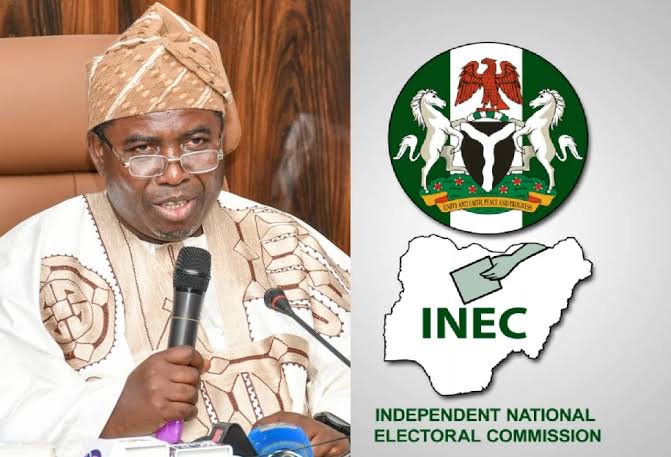
Chairman of the Independent National Electoral Commission (INEC), Prof. Joash Amupitan, has disclosed that the timetable and schedule of activities for the 2027 General Election have already been finalised by the Commission but cannot be released pending the conclusion of proposed amendments to the Electoral Act by the National Assembly.
Amupitan, who spoke on Wednesday in Abuja at INEC’s first quarterly consultative meeting with Civil Society Organisations (CSOs) for 2026, said the delay in unveiling the timetable was not from the Commission but tied to ongoing legislative processes.
According to him, Section 28(1) of the Electoral Act, 2022 empowers INEC to issue a notice of election not later than 360 days before the date of the poll, and the Commission has acted in line with the law by preparing the timetable ahead of time.
“We are mindful of the growing public interest and anticipation surrounding the release of the timetable. The timetable has been finalised by the Commission in compliance with the Electoral Act. However, there are some proposed amendments in the Electoral Act currently before the National Assembly which are delaying its release”, he said.
He urged civil society groups and other stakeholders to support efforts to encourage the National Assembly to expedite action on the amendment process to enable INEC release the document in full compliance with the law.
The INEC chair also raised fresh concerns over the integrity of the national voters’ register, revealing that the Commission had discovered the names of prominent politicians among records suspected to contain irregularities, including deceased persons
.
“We discovered names of prominent politicians in the register in circumstances that raise serious questions. That in itself is an indictment. We cannot expect dead people to come out and vote.”
Amupitan said the development underscored the urgency of a comprehensive Voter Revalidation Exercise ahead of the 2027 General Election, aimed at sanitising the register and restoring public confidence in the electoral process.
He explained that since the voters’ register was first compiled ahead of the 2011 General Election, it had been continuously updated and deployed in subsequent elections, but persistent challenges such as duplicate registrations, under-age registrations, non-citizen registrations, deceased voters and incomplete records remained.
As part of measures to address these anomalies, INEC, he said, would embark on a nationwide voter revalidation to strengthen the integrity of the register before 2027.
Beyond the 2027 election, Amupitan outlined a busy electoral calendar for 2026, beginning with the Federal Capital Territory (FCT) Area Council elections scheduled for February 21, 2026, involving 1,680,315 registered voters across 2,822 polling units in the six area councils.
He said non-sensitive materials had been delivered, ad hoc staff recruited and trained, while sensitive materials would be distributed a day before the election.
He said the mock accreditation exercise using the Bimodal Voter Accreditation System (BVAS) will hold on February 7 in 289 selected polling units.
Amupitan said INEC has also accredited 83 domestic and five foreign observers for the FCT polls, while campaigns are to end on February 19.
On the same day as the FCT polls, he revealed that the Commission will conduct bye-elections in Ahoada East II and Khana II State Constituencies of Rivers State, as well as Kano Municipal and Ungogo State Constituencies of Kano State, following the resignation and deaths of some lawmakers.
The INEC boss further noted that the Ekiti and Osun State governorship elections are already on the electoral timetable for June 20 and August 8, 2026, respectively, with several activities already completed.
He also disclosed that the Commission had received 171 letters of intent from associations seeking registration as political parties, but many failed to meet constitutional and legal requirements. Successful associations, he said, would soon be announced.
Amupitan called on CSOs to intensify voter education, mobilise residents in the FCT to collect their Permanent Voter Cards before the February 10 deadline, and monitor political parties’ conduct to curb hate speech, vote buying, misinformation and violence.
“As we look towards the 2027 General Election, it is imperative that we remain vigilant and proactive. We must prepare for a seamless electoral process that embodies the ideals of democracy, justice and inclusivity,” he said.