By Yusuf Bangura
Jan 16, 2026
We are currently enjoying our time in Sierra Leone after a delightful six-day visit to The Gambia.
We’ve visited a few beaches and gone as far as Sussex beach on the Freetown peninsula to eat lobsters at Franco’s restaurant.
We’ve also had lunch at The View restaurant on the 15th floor of the new Freetown City Council building downtown overlooking River Rokel, Lac’s restaurant at Brookfields, Roof Garden at Wilkinson Road, Roots at Wellington Street, and The Pulse at Gloucester Street.
While enjoying the vibrant restaurant atmosphere, we’ve also reconnected with family and a few friends to catch up on life in the city, as well as visited my old schools—the Prince of Wales and St. Edward’s—and talked with the principals and a few teachers.
And yesterday, we were at my childhood mosque at Naimbana Street to see the Chief Imam, whom I grew up with. We inspected the mosque’s school adjacent to the mosque, and talked with two teachers and Class Six pupils in one of the classrooms.
We’ve also visited Kroo Town Road market, which we frequented while growing up, and enjoyed a long conversation with the market chairman, Abdulai Bah (a butcher) and Christiana Davis, an established female trader who sells trotters, onions and assorted products. We talked about the history, organisation, inter-ethnic relations and informal banking system (osusu) of the traders.
I’ll try to provide a few insights on some of these activities in future blogs. But today I want to talk about the incredibly strong revival of cultural music, drama, comedy, storytelling, and acrobatic displays in provincial towns and villages. I’ll focus on the seven hours of riveting cultural entertainment we saw at Port Loko on Monday 12th January.
Since the end of the brutal civil war in 2002, Sierra Leone has undergone a vibrant cultural renaissance. Talented young men and women have flooded the cultural landscape with visual art, captivating melodies, drama, theatrical dance styles, comedy, and acrobatic displays.
Some of the drivers of this movement include organisations like The Barray, The Reunion and Bondumani Bamboo Village—all three focusing on fine art; and Creative Hub Africa, which organises open mic nights for artists to connect and develop their talents. Telem Uncommon Sounds, founded by Isatu Harrison, also helps young artists to improve their skills on songwriting and music production. And Wan Roof Theatre is awakening a dormant audience culture and honing the next generation of acting talent.
One organization making a significant impact on provincial music, dance, and drama is the Lek U Culture Association. Founded in the U.S. by Alhassan Fofana to promote Sierra Leonean heritage, it supports numerous local groups in showcasing their talent to both domestic and global audiences.
Youtube has emerged as a catalyst for this cultural renaissance, allowing artists and musical associations to bypass industry middlemen and take their trade directly to the fans. Watching Sierra Leone’s burgeoning artists on YouTube has given us a front-row seat to the country’s evolving traditional music and arts.
The platform features cultural videos in almost every ethnic language. Indeed, it is YouTube that exposed us to the works of artists like Denkena, Amie Kallon, Ahmed Janka Nabay, Marie V, Alhaji KingWin, Augu B, Kandeh Bureh, Abie Yayo, Star Girl, Amie C, Pretty Q, Bobby P, Sorie Kondi, Aminish, Disco Daddy, and 4TP. We watch them almost every week.
*An unforgettable night*
We couldn’t resist the urge to travel to Port Loko, which is only a 90-minute drive from Freetown, when we learned that two artists we’ve been following from Switzerland—Augu B and Kandeh Bureh—were performing in the town. Through the help of a young family friend who works in Port Loko, we quickly booked a hotel, reached out to one of the artists and informed him about our interest in the show. He decided to give us a VIP treatment.
We left Freetown around 10:30 in the morning and arrived around mid-day. This allowed us to spend much of the afternoon with family members and and a childhood friend at my parents’ hometown, Mange—a smooth, thirty-minute drive from Port Loko. The journey from Freetown to Port Loko was refreshing and enjoyable. The air felt fresh, the scenery was lush green and there were only a few houses along the highway after Waterloo—a sharp contrast to the noise and congestion of Freetown. We felt liberated. And we loved the 62-kilometre long dual carriageway from Wellington to Masiaka. It has greatly improved the travel experience between Freetown and the provinces.
We stayed at MJ Motel, which was decent, clean and cheap. The show was scheduled for 20:00. We got there on time, but it didn’t start until 22:30. It finished at 05:30! There were only a handful of people when we arrived. We thought it would flop; but by 10:15, the place was jam-packed, with a huge crowd still outside.
The artists delivered seven hours of non-stop, high energy musical entertainment, drama and acrobatics. It more than made up for the long delay.
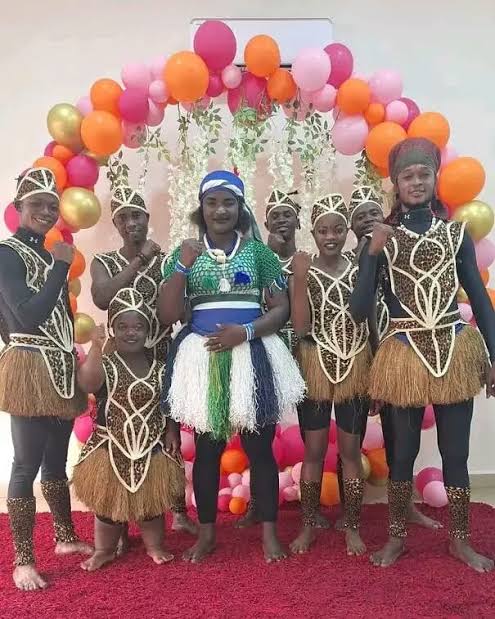
Following a two-and-a-half-hour opening set by about a dozen local artists, each of the main acts, Augu B and Kandeh Bureh, performed with a full ensemble. Fifteen-year old Augu B performed with two other lead artists—her two sisters, university graduate Abie Yayo and eight-year old Star Girl—and a large group of dancers. And Kandeh Bureh commanded the stage with a masterful cast of dancers, acrobats, and magicians.
The songs, mostly in Themneh, were rhythmic, high tempo, and utterly hypnotic. They were delivered with mesmerising and lively-paced dance movements. Several songs were dramatised, telling simple yet powerful stories of everyday life. I will always remember Augu B and her group’s incredible entrance; the fire displays and perfectly choreographed movements moved in total sync with the heavy, pulsing beat of the music. I thought I was watching a Hollywood film. It truly was a class act.
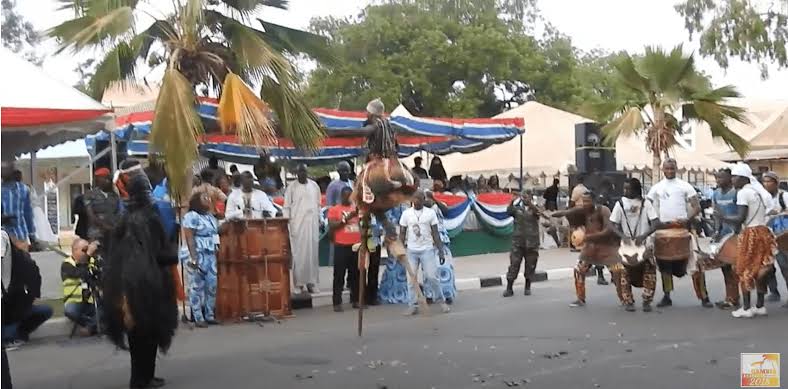
And the cast of Kandeh Bureh’s acrobatic and magical displays were truly out-of-this-world, blowing the audience away. A young dancer was suspended, legs up, with his head resting on the head of another dancer climbing steps and walking on the stage. Another dancer juggled three sticks of fire continuously for several minutes. A dancer poised six tiers of bottles atop a knife edge. Acrobats formed towering human pyramids by climbing on top of each other with incredible ease. And many more.
We had a long and useful discussion with Kandeh Bureh and Augu B’s father (he manages her and her two sisters) at Kandeh Bureh’s house the following day before returning to Freetown. We learned that most of the cultural artists in Northern Sierra Leone originated from Mile 91. Kandeh Bureh affirmed that there could be more than thirty cultural groups in that town.
Augu B’s father, Bakar Kabia, provided three interesting explanations for Mile 91’s success in nurturing cultural artists. The first was the peacebuilding role of the post-war radios—Radio Mankneh and Radio Gbaft (Open in Themneh)—in the region. According to him, one of the radio programmes, ‘Tar teyi-su’ (Leave us alone), used cultural songs and interviews to help displaced people connect with their families and villages. Kabia also believed that during the cultural renaissance’s formative years, Mile 91 residents championed their local artists. And the third factor was the Poro secret society, which is deeply ingrained in that part of the Themneh region. Local artists have frequently drawn upon the society’s vast repertoire of traditional songs to establish their musical careers.
Over the years, we’ve watched many first-rate artistic performances around the world. What Augu B, Kandeh Bureh and their respective ensembles offered us last Monday at Port Loko was among the best we have ever seen.