Isaac Samuel
Serious constitutional questions have been raised over Nigeria’s tax reform laws following revelations that provisions contained in the gazetted versions of the Acts differ materially from those passed by the National Assembly.
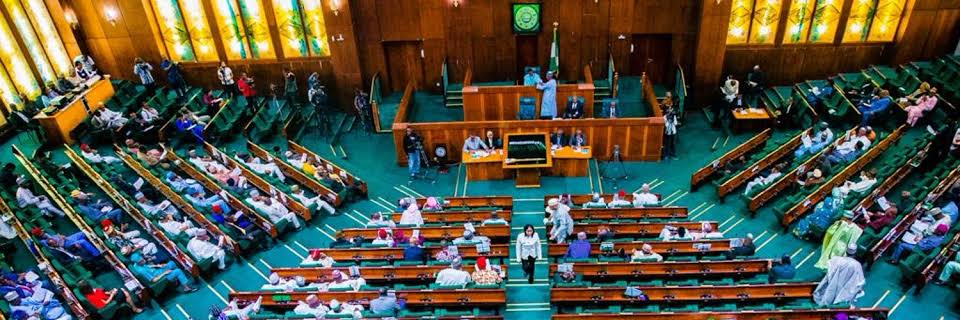
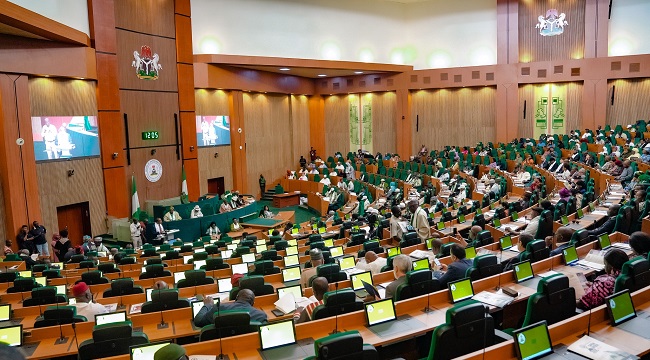
The alarm was first raised by a member of the House of Representatives, Abdulsamad Dasuki, who during a plenary session alleged discrepancies between tax laws passed by the National Assembly and the versions subsequently gazetted and made available to the public.
He said his legislative rights had been breached because the content of the gazetted tax laws did not reflect what lawmakers debated and approved on the floor of the House.
The tax bills were passed by the House in February after months of debates, public hearings, and clause-by-clause consideration, and were later harmonised with the version passed by the Senate.
On 26 June, President Bola Tinubu signed the four bills into law.
The lawmaker explained that after the passage of the tax bills, he undertook a personal review of the official legislative records to verify the outcome of the process.
“We passed the tax laws on this floor and, Mr. Speaker, I took my time in the last three days to look at the gazetted passed copy, the Votes and Proceedings of the House of Representatives, and also went an extra mile to look at the Votes and Proceedings of the Senate of what was harmonised,” Dasuki said.
Since then, opposition parties and Civil Society Organisations have been calling for investigation into the matter.
This triggered the House to establish a seven-member ad hoc committee to investigate the alleged discrepancies.
The committee is headed by Aliyu Betara while members include Idris Wase, Sada Soli, Adedeji Faleke, Igariwey Iduma, Fred Agbedi and Babajimi Benson.
However, on Monday, the controversy heightens following the circulation of a document titled “Tax Bill Alteration/Change Analysis – Comparing House Version vs Gazetted Version”, which details what it describes as six substantive changes made after legislative passage.
The document compares the House-passed Nigerian Revenue Service Bill with the version later gazetted and identifies insertions, deletions and alterations that were allegedly never debated or approved by lawmakers.
Its key findings, the document underpinning the controversy noted that substantive provisions were inserted, deleted or modified after passage by both Chambers, stressing that these changes cannot be classified as clerical or editorial corrections.
It further stated that post-passage alterations violate sections 4 and 58 of the Constitution, adding that any provision not passed by the National Assembly is void and unenforceable.
According to the document, Under Clause 23 of the House version, the bill expressly listed the taxes to be administered by the Service as “(i) income tax (ii) taxation of petroleum income (iii) stamp duties (iv) VAT (v) tax incentives.”
However, the document stated that in the gazetted version, “Clause 23 [was] replaced with Section 26 of the Gazette,” and that the gazetted text “deleted ‘taxation of income from petroleum operations’” and “deleted ‘value added tax’.”
According to the analysis, the implication of this change is that “it removes explicit federal administrative power over petroleum income tax and VAT under this subsection,” while also creating “an internal inconsistency because VAT is still listed in 3(1)(a)(v).”
The document warns that this could affect constitutional disputes over VAT administration between Federal and state authorities.
Another major alteration highlighted relates to petroleum tax computation.
While the House version provides that “in the case of a return under this Act relating to petroleum operations, all computations shall be in currency of transaction,” the gazetted version states that “all computations relating to tax shall be in US Dollars.”
The document notes that this change “materially affects reporting, tax modelling, FX exposure, compliance systems, and upstream operators using other currencies.”
On enforcement powers, the House-passed provision states that “the relevant tax authority may by notice in writing appoint any person to be the agent.”
The gazetted version, however, expands this authority, stating: “The relevant tax authority may, without an order of the High Court, and by notice in writing appoint any person.”
The implication, according to the document, is “a major empowerment of the tax authority and granting it garnishee power, removing judicial oversight, and bypassing court orders.”
It adds that “the change increases risk of abuse, and affects taxpayers’ constitutional right to property (s.44 CFRN).”
The analysis also points to a “new insertion made to the bill” under Section 41(8), which it notes was “not in the House version.”
The gazetted provision states that “a taxpayer appealing to the High Court must pay 20% of the disputed amount as security before hearing of appeal.”
According to the document, this “introduces a financial barrier to High Court appeals,” “infringes access-to-justice principles,” and “may be unconstitutional unless justified.”
Indeed, the controversy over the alleged post-passage alteration of Nigeria’s tax laws is fast assuming the character of a constitutional crisis because it strikes at the heart of the law-making process established by the 1999 Constitution.
Section 58 is explicit that a bill becomes law only after passage by the National Assembly and assent by the President in the exact form approved by lawmakers.
If provisions were inserted, deleted or modified after parliamentary passage, as alleged, the authority of the legislature would have been usurped, rendering the gazetted law constitutionally defective and potentially void.
The situation is further complicated by the substance of the alleged changes, which touch on core constitutional principles such as separation of powers, access to justice and judicial oversight.
Provisions reportedly empowering tax authorities to act “without an order of the High Court,” mandating security deposits before appeals, and altering the scope of federally administered taxes raise questions about whether executive or bureaucratic actors assumed powers reserved for the legislature and the judiciary.
When laws with far-reaching fiscal and coercive implications are altered outside due process, it creates uncertainty over which arm of government is exercising lawful authority.
Beyond the legal technicalities, the unfolding dispute risks paralysing governance and undermining public confidence in democratic institutions. A tax regime whose legitimacy is in doubt cannot command voluntary compliance, while uncertainty over enforceability invites litigation, resistance and investor hesitation.
Reacting to the revelations, the Resource Centre for Human Rights & Civic Education (CHRICED) described the alleged alterations as a direct attack on Nigeria’s democracy.
In a statement signed by its Executive Director, Comrade Dr. Ibrahim M. Zikirullahi, the organisation said the matter went far beyond clerical error.
“This is not a clerical error. This is not a misunderstanding. This is a direct assault on Nigeria’s democracy,” CHRICED said.
He described the alleged acts as “legislative forgery, a criminal hijacking of the law making process.
CHRICED demanded the immediate suspension of the affected tax laws, prosecution of those involved, and full public disclosure of investigative findings, warning that secret alterations undermine the rule of law and public trust.
The Peoples Redemption Party (PRP) has called on the National Assembly to initiate impeachment proceedings against President Bola Ahmed Tinubu if he is found to have been involved in the alleged post-passage alteration of Nigeria’s tax laws.
The opposition party accused the executive arm of government of tampering with legislation already passed by the National Assembly, describing the alleged action as a grave violation of the Constitution and the principle of separation of powers.
National Chairman of the PRP, Falalu Bello, in a statement on Monday, noted that any alteration of a bill outside the legislative process amounts to executive misconduct and undermines parliamentary sovereignty.
The PRP warned that if evidence links President Tinubu to the alleged manipulation, the National Assembly must act without hesitation.
“In light of these grave developments, the PRP calls for a comprehensive and transparent investigation of these alterations and additions to the already passed Act of Parliament to identify and punish all those responsible for this egregious misconduct.
“We insist that those found culpable, regardless of their position, must be held accountable and face appropriate punishment for their fraudulent conduct. If evidence emerges implicating President Bola Ahmed Tinubu in these illegal manipulations, the PRP calls for his impeachment without delay. No individual, including the President, should be above the law”, he said.
Similarly, the Civil Society Legislative Advocacy Centre (CISLAC), Nigeria’s chapter of Transparency International, said the allegations raise grave concerns about legislative integrity.
In a statement signed by its Executive Director, Comrade Auwal Musa Rafsanjani, the organisation warned that assenting to a materially different law would amount to a constitutional breach.
CISLAC urged the Presidency to publish the exact version of the law assented to alongside the authenticated copy passed by the National Assembly, and called for stronger safeguards to prevent secret alterations in the future.
The African Democratic Congress has called for the immediate suspension of Nigeria’s recently introduced tax laws, alleging that critical sections were modified after approval by the National Assembly and assent by President Bola Tinubu, a development the party described as a grave constitutional breach.
National Publicity Secretary, Bolaji Abdullahi, the party warned that altering legislation after approval by the legislature raises concerns that President Tinubu is allegedly seeking to centralise power.
The opposition party demanded an immediate halt to the implementation of the tax laws to enable the National Assembly review the alleged alterations and take appropriate corrective action.
ADC’s forensic review of the original laws and the gazetted versions has also established beyond doubt that key accountability provisions were deleted, while new clauses were inserted granting coercive powers to the Executive in enforcing the tax laws without recourse to the courts. For example, one of the insertions allegedly grants the government the express power to arrest individuals and take over their property for non-compliance with the tax laws.
But speaking on Channels Television’s Morning Brief, the Chairman of the Presidential Fiscal Policy and Tax Reforms Committee, Taiwo Oyedele, said what has been circulating in the media was fake.
“Before you can say there is a difference between what was gazette and what was passed, we have what has not been gazette. We don’t have what was passed,” he said.
“The official harmonised bills certified by the clerk, which the National Assembly sent to the President, we don’t have a copy to compare. Only the lawmakers can say authoritatively what we sent.
“It should be the House of Representatives or Senate version. It should be the harmonised version certified by the clerk. Even me, I cannot say that I have it. I only have what was presented to Mr President to sign.”
Oyedele stated that he reached out to the House of Representatives Committee regarding a particular Section 41 (cool, which states, “You have to pay a deposit of 20 per cent.”
He noted that the response given by the committee was that its members had not met on the issue.
“I know that particular provision is not in the final gazette, but it was in the draft gazette. Some people decided that they should write the report of the committee before the committee had met, and it had circulated everywhere.
“What is out there in the media did not come from the committee set up by the House of Representatives. I think we should allow them do the investigation,” Oyedele added.