Isaac Samuel
As the National Assembly prepares for another decisive round of voting on amendments to the 1999 Constitution, pressure is building from youth coalitions, civil society leaders and pro-democracy organisations for lawmakers to embrace a more transparent and accountable voting process.
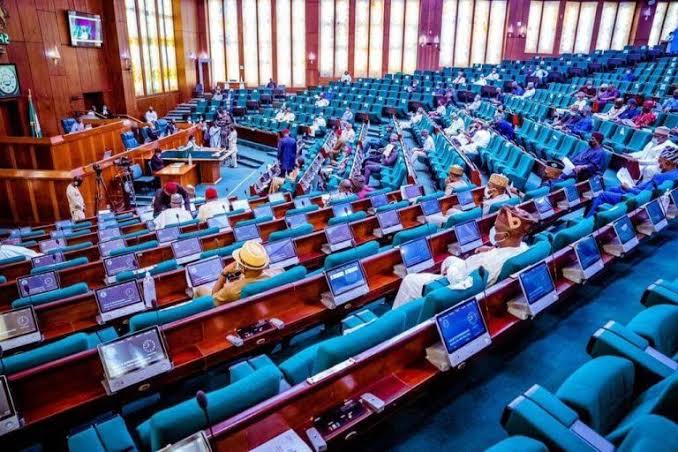
At the heart of the latest call is a demand for the adoption of a digital voting system that publicly displays how each senator and member of the House of Representatives votes.
Deputy Speaker and Chairman of the House Committee on Constitution Review, Benjamin Kalu, had during plenary session on Thursday said lawmakers in the lower chamber may cast their vote on the ongoing review of the 1999 Constitution on December, 10.
Kalu said the chamber is likely to dedicate three consecutive legislative days to conclude debates on the proposed amendments before taking a final position the following week.
If the House meets the 10 December timeline, the vote will take place before the chamber proceeds on its end-of-year break.
The Senate is also expected to proceed with its own vote after which harmonised positions will be transmitted to state assemblies for concurrence, as required by the Constitution.
If adopted by at least 24 state assemblies, the amendments will be returned to the National Assembly for final certification and onward transmission to the president for assent.
It was gathered that the House has already completed the technical work required for the current phase of the review process, and the committee is now preparing the final documents that will be tabled before lawmakers for consideration.
Stakeholders however believe making
public display of how each individual lawmaker votes on the proposed reforms is crucial to restoring public trust and widening civic participation in national decision-making.
The push, championed by youth organisations under the Youth Political Participation (YPP) Electoral Reform Consortium, resurfaced this week during the National Day of Action on Youth-Led Electoral Reforms held in Abuja.
For a Constitution that has suffered legitimacy crises, the groups argue that Nigerians deserve full access to the decisions taken in their name.
Although the National Assembly has previously experimented with open voting, analysts say the process remained only nominally transparent because citizens cannot access the detailed voting patterns of their elected representatives once deliberations end.
Instead, decisions are often lost in collective announcements, leaving no trace of individual accountability.
Nigeria’s push for open parliamentary voting is not new. Over the past decade, calls have emerged during the 2014 National Conference, the 8th Assembly’s debate on constitutional amendmentspublic outcry over the Electoral Act amendment process and the rejection of gender bills in 2022.
Yet each attempt was overshadowed by partisan negotiations, internal resistance, and fears among lawmakers that public voting could expose political loyalties and attract backlash from powerful interests.
But as citizens become more politically aware and more digitally connected, the cost of legislative secrecy is rising. Experts say the National Assembly risks a legitimacy crisis if it continues to shield voting patterns.
The renewed pressure comes at a time when the National Assembly is concluding work on key constitutional amendments, including proposals affecting electoral timelines, judicial reforms, gender inclusion, local government autonomy and political party regulations.
Civil society leaders insist that the choices lawmakers make over the coming weeks would shape the country’s democratic future and, therefore, must not be taken behind opaque procedures.
For many observers, the lessons of the 9th Assembly’s rejection of five gender-related constitutional amendments in 2022 remain fresh.
The backlash from women groups, youth movements and pro-democracy organisations revealed that Nigerians are frustrated with a legislative process perceived as insulated from scrutiny.
According to observers, in many mature democracies, parliamentary voting records are public documents. They shape political reputations, influence electoral outcomes and guide civic advocacy.
In Nigeria, however, the absence of such records has created a vacuum exploited by political actors and lobbyists to the detriment of transparency.
For young Nigerians, who form more than half of the country’s populatio, this lack of openness deepens political cynicism and weakens civic engagement.
The absence of publicly documented voting records made it impossible for citizens to know which lawmakers supported or opposed the amendment.
“It cannot be business as usual,” said Oluwafemi Adebayo, Head of Research and Strategy at Kimpact Development Initiative (KDI), the National and North Central partner of the consortium.
According to him, while digital voting has been deployed at various times in the National Assembly, the details are seldom published.
“That is not transparency. Nigerians want to see their lawmakers’ votes go up or down in real time. Even if it requires calling each lawmaker one after the other, the country deserves to know where their representatives stand”, he said.
He warned that refusing to embrace public voting risks repeating past mistakes that alienated citizens, especially young Nigerians who are increasingly disillusioned with the political process.
Speaking on the development, an analyst with Yiaga Africa, Nurudeen Garba said public display of legislative votes is not merely desirable budemocratic obligation.
“Across the world, parliaments publish detailed voting records as a democratic standard. Nigeria cannot continue to operate a system where citizens are kept in the dark about decisions taken on their behalf,” he noted.
He argued that open voting is critical for improving political representation.
“If lawmakers know that their votes will be publicly accessible, they are more likely to align with the interests of their constituents rather than partisan or private influences.”
Executive Director of Electoral Transparency unit, Emmanuel Nicholas warned that absence of transparency in the lawmaking process contributes significantly to public distrust.
He said it is unacceptable that in 2025 we still debate whether Nigerians should know how their elected representatives vote, adding that opacity breeds distrust, and distrust weakens legitimacy.
Nicholas added that hiding voting patterns shields lawmakers from responsibility and encourages political bargaining that does not reflect public interest.
For Yesufu Matthew, Lead Analyst at Election Hub Africa, the ongoing constitutional review represents an opportunity for the National Assembly to prove its commitment to open governance.
“Digital transparency is the direction modern democracies are moving toward. Viewing voting patterns in real time not only enhances trust but also strengthens Nigeria’s democratic institutions,” she said.
She urged the National Assembly to publish digital voting records after every session and create an accessible online database for public scrutiny.